 Seattle
 Ravenna sits under some of the heaviest tree canopy in Seattle, tucked between Green Lake and the University District with the Ravenna Park ravine running through the middle of it. That canopy is part of why people love the neighborhood, but it's also why siding here ages differently than it does on a more open lot. Shade holds moisture on north- and east-facing walls long after a sunnier block has dried out, and the mix of older Craftsman bungalows and early-to-mid-century houses means a lot of the siding on the ground right now was never built for a wet Pacific Northwest climate in the first place. When it's time to replace it, doing the job right in this neighborhood takes more than swapping old boards for new ones.
Why Ravenna's Siding Wears Out Differently
King County's marine climate doesn't treat Ravenna gently just because it's a few miles from Puget Sound. Salt-tinged air still moves through the region, wind pushes rain sideways into walls during winter storms instead of letting it fall straight down, and a long moss season gives anything shaded and damp months at a time to take hold. Add Ravenna's mature street trees and backyard canopy, and you get siding that stays wet longer between storms than it would on an exposed lot across town.
Shade and moisture retention
A wall that dries within a day after rain sheds water fine. A wall that stays damp for a week because a maple canopy blocks the sun and wind is under a different kind of stress — that's where paint fails first, where moss and mildew get a foothold, and where wood-based siding starts to soften from the back side, invisible from the street.
Age of the housing stock
Much of Ravenna's housing predates today's weather-resistant barriers and rain-screen details. Original siding — or a prior replacement done to older standards — is often carrying decades of moisture cycling with none of the drainage gap or flashing detail a correct modern installation would include.
Signs Your Ravenna Home Needs Siding Replacement
Not every siding problem calls for a full replacement — some are cosmetic, some are localized repairs. But a few signs, especially on an older Ravenna home, usually mean the siding system itself has reached the end of its service life:
- Boards that are soft, spongy, or crumbling when pressed, especially near the bottom courses or under windows
- Paint that won't hold anymore, even after prep and a fresh coat — a sign moisture is coming from behind, not just weathering the surface
- Persistent moss or dark streaking on shaded walls that returns within a season of cleaning
- Visible gaps, warping, or cupping in individual boards
- Rising utility bills or noticeably drafty rooms along exterior walls, which can point to a failed weather barrier behind the siding
- Interior signs — stained drywall, musty smell, or soft trim — on walls behind older or shaded siding runs
If more than one or two of these show up on the same wall, it's worth having someone open a small section and look at what's actually happening behind the siding before deciding between repair and full replacement.
What a Correct Siding Replacement Actually Involves
Siding replacement isn't just removing old boards and hanging new ones. On an older Ravenna home in particular, most of the work that determines whether the new siding lasts happens before a single new board goes up.
Tear-off and what's underneath
Full removal is the only way to actually see the sheathing, framing, and old weather barrier condition. On houses this age, it's common to find old building paper that's brittle or missing in spots, and occasionally soft sheathing where a prior leak went unnoticed for years. That gets repaired before anything new goes up — covering damaged sheathing with new siding just seals the problem in.
Flashing and water management
Every window, door, and penetration needs flashing sequenced correctly — installed in the order that lets water shed outward at each layer rather than relying on caulk to plug a gap. This is the detail that gets rushed on a low-bid job, and the one that decides whether the new siding is still performing in fifteen years or letting water in behind year one.
Ventilation and drainage
A rain-screen gap — a small drainage space between the weather barrier and the new siding — gives any moisture that does get past the outer layer a path to drain and dry instead of sitting against the wall. Given how long Ravenna's shaded walls stay damp after a storm, that drainage path matters more here than it would on a drier, sunnier lot.
Why We Install Only James Hardie Fiber Cement
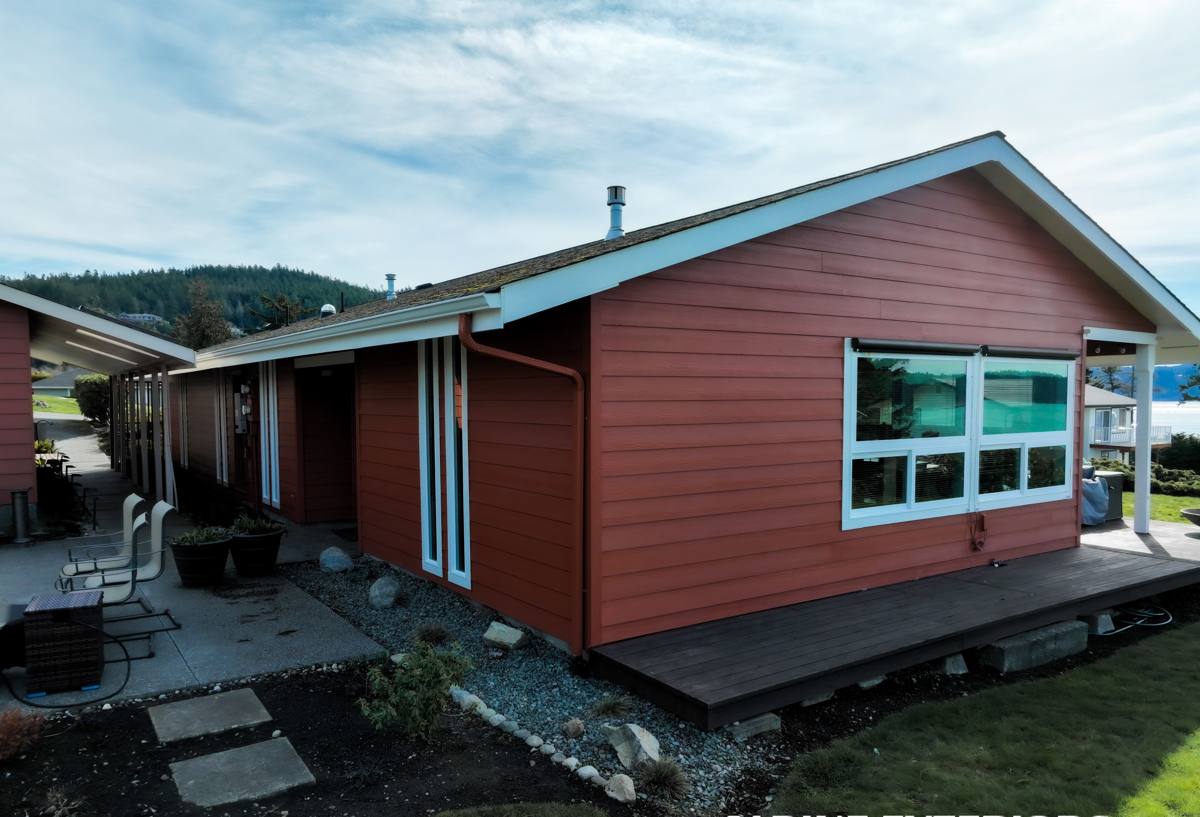
We don't install vinyl, LP SmartSide, primed spruce, cedar, or other fiber cement brands like Allura or Cemplank. That's not a knock on every product on that list — some have real strengths. It's that after weighing how each one holds up long-term against a climate like this one, James Hardie fiber cement is the product we're willing to put our name behind and warranty. It's non-combustible, engineered for wet regional climates through Hardie's HZ product line, and finished at the factory with ColorPlus coating rather than relying on field-applied paint that has to be redone on a cycle.
| Material | How It Handles a Wet, Shaded Climate |
|---|---|
| Vinyl siding | Won't rot, but expands and contracts with temperature and can crack or warp; seams and panels give moisture a path if not installed precisely |
| Cedar siding | A genuinely attractive natural material, but needs ongoing sealing and maintenance to resist the moss, mildew, and moisture cycling common on shaded walls |
| Primed wood / LP SmartSide | Engineered wood resists moisture better than raw lumber but still relies on an intact paint film and careful edge-sealing to stay ahead of long wet seasons |
| James Hardie fiber cement | Non-combustible, dimensionally stable, factory-finished ColorPlus coating engineered to resist fading and moisture intrusion when installed to spec |
None of that means every other product fails outright — it means the trade-offs involved are ones we're not willing to install and then hand a homeowner a maintenance list for. Hardie's warranty structure and long track record in Pacific Northwest conditions are why it's the only siding we put on Ravenna homes.
James Hardie Options That Fit Ravenna's Housing Stock
Hardie makes several product lines, and which one fits a given Ravenna house usually comes down to its original architecture.
HardiePlank lap siding
The most common choice for the Craftsman bungalows and traditional houses that make up much of Ravenna — horizontal lap boards in a range of widths and textures that closely match what was likely on the house originally.
HardieShingle
For homes with shingle-style detailing or gable accents worth preserving, HardieShingle panels replicate a staggered or straight-edge shingle look without the ongoing maintenance real cedar shingles need in a damp, shaded location.
ColorPlus factory finish
Every Hardie product we install can come with a ColorPlus finish — baked on at the factory rather than sprayed or brushed on site. It holds color longer than field-applied paint and carries its own finish warranty, which matters most on the shaded, slow-drying walls common throughout this neighborhood.
Our Process, Built Around How Ravenna Actually Works
Access on tight, tree-lined lots
Ravenna's blocks are denser and older than a lot of Seattle's newer neighborhoods, with narrower side yards and mature trees close to the house. We plan material staging and scaffolding around that reality, and take care around root systems and low branches instead of treating landscaping as an obstacle to work around carelessly.
Permitting and scheduling around the rain
Siding replacement in Seattle typically requires a permit, and we handle that process as part of the job rather than leaving it to the homeowner to sort out. We also sequence tear-off so a wall doesn't sit open to the weather any longer than necessary — a real consideration for most of the year in this climate.
What Drives the Cost of Siding Replacement
We won't quote a number without seeing the house, but the factors that move price are consistent from job to job:
| Factor | Why It Matters |
|---|---|
| Wall square footage and home height | More surface area and multi-story access both add material and labor time |
| Condition underneath the old siding | Rot or old water damage found during tear-off adds repair work before new siding goes up |
| Siding profile and finish | Lap width, shingle-style panels, and trim complexity affect material and installation time |
| Number of windows, doors, and penetrations | Each one needs its own flashing detail, which adds labor regardless of wall size |
| Site access | Tight side yards, mature trees, or limited staging area common on older Ravenna lots can add time |
| Color and finish choice | Factory ColorPlus finishes vs. field-painted options carry different upfront and long-term costs |
Why a Crew That Already Works Ravenna Matters
A lot of siding problems in this neighborhood trace back to details that don't show up in a generic installation manual — how much drainage gap a shaded wall actually needs, where an older house is likely to have hidden rot behind a window, how to sequence a tear-off around Seattle's rain rather than around a sunny-week assumption. A crew that's worked this specific neighborhood has already run into those details and knows where to spend extra time before a problem shows up, not after — including the parking, staging, and permitting realities that come with denser, older blocks.
Living With Hardie Siding Through Ravenna's Wet Seasons
Correctly installed Hardie siding is low-maintenance compared to wood or vinyl, but "low-maintenance" doesn't mean "no maintenance" in a climate like this one. A yearly rinse to knock moss and organic buildup off shaded walls, keeping gutters clear so water isn't sheeting down the siding face, and trimming back branches that keep a wall in constant shade all go a long way toward getting the full lifespan out of the system. None of that is unique to Hardie — it's the reality of owning a home under Ravenna's tree canopy — but a fiber cement system engineered for this climate gives you a lot more margin for error than a product that depends on an unbroken paint film or regular sealing to keep water out.
If your siding is showing its age or you're just trying to understand what a correct replacement would involve on your specific house, we're glad to take a look. We offer free, no-pressure estimates for siding replacement in Ravenna and the surrounding Seattle area — use the form below to get a time on the schedule.