 Seattle
 Building Decks for Ravenna's Marine Climate
Ravenna sits inland from Puget Sound but still lives inside the same weather system as the rest of King County — a long wet season, salt-tinged marine air rolling in off the Sound, and tree cover dense enough that moss and algae find a foothold on almost any outdoor surface that isn't actively shedding water. A deck built here has to do more than look good on a dry August afternoon. It has to survive eight or nine months of the year where it's damp more often than not, and it has to keep doing that for decades without the framing quietly rotting behind a good-looking surface.
Most deck failures we get called out to inspect in this area aren't dramatic. They're slow — a ledger board that's been trapping water against the house for years, fasteners that rusted from the inside out, or a walking surface that's grown a slick coat of algae because nobody accounted for drainage or airflow underneath. None of that is inevitable. It's a function of how the deck was built in the first place.
What a Deck Needs to Handle in This Neighborhood
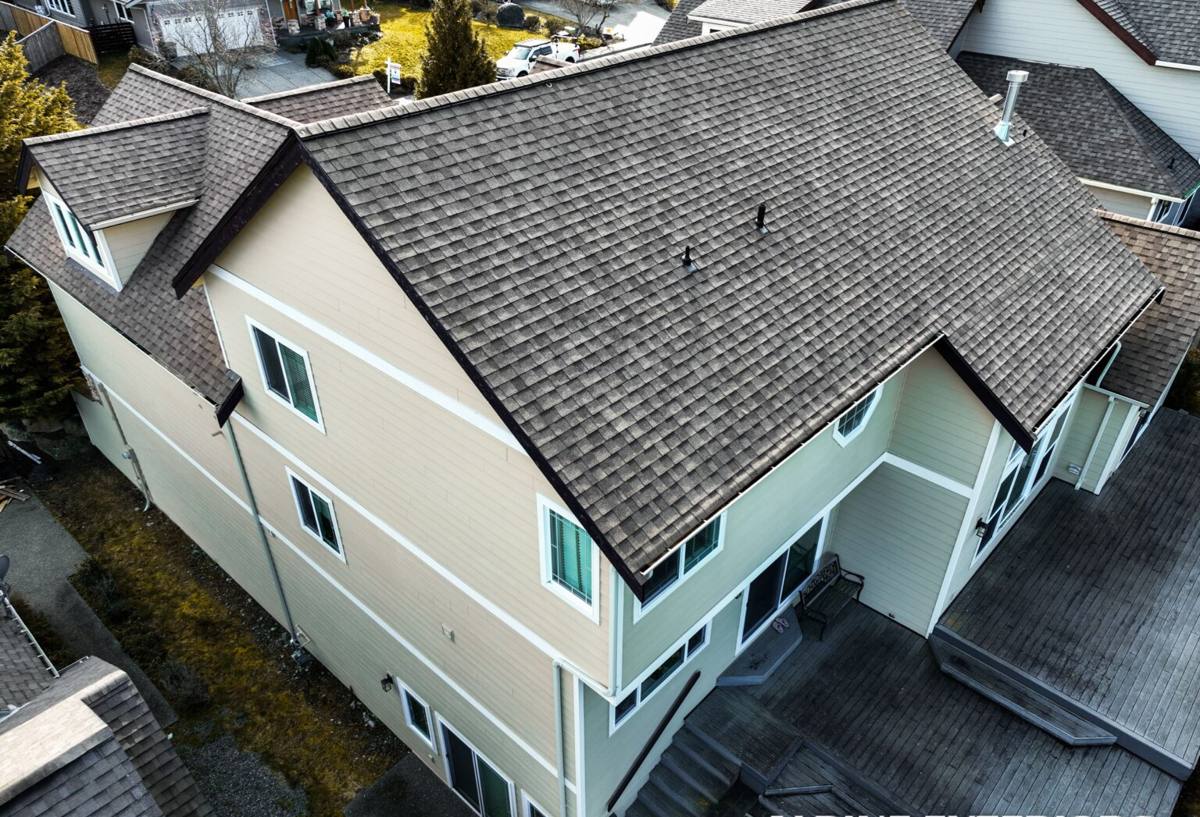
Ravenna's mix of older bungalows and mid-century homes means we see a wide range of existing conditions — some houses with siding and trim original to the build, others already remodeled with modern water management. Whatever the starting point, a deck in this part of Seattle needs to account for a few realities that don't show up on a spec sheet:
- Sustained rainfall, not just occasional storms — moisture exposure is measured in months, not days
- Shade from mature trees, which slows drying time on the deck surface and framing after every rain
- Moss and algae growth on any horizontal surface that stays damp and shaded
- Slightly salt-bearing marine air, which accelerates corrosion on lower-grade metal hardware over time
- Sloped and uneven lots common to the neighborhood, which affect footing depth and framing height
None of these are exotic problems — they're just the normal cost of doing business in the Pacific Northwest. The difference between a deck that lasts 10 years and one that lasts 30 usually comes down to whether the builder actually designed for them.
Ledger Flashing and Moisture Control: The Number One Failure Point
Why This Detail Matters More Than Anything Else
If a deck is attached to the house, the ledger board — the piece that bolts the deck framing to the band joist — is the single most important detail on the entire project. It's also the most commonly botched, because it's hidden behind the decking and siding once the job is done, and problems there don't show up for years.
Done right, the ledger connection includes proper flashing that directs water away from the house rather than behind it, a gap or drainage plane between the ledger and the siding so water can't wick in, and structural bolts sized and spaced to code — not just deck screws. In a climate that gets driving rain for months at a stretch, any gap in that flashing becomes a slow leak straight into the rim joist and subfloor of the house itself.
Free-Standing Decks as an Alternative
On some Ravenna lots, especially where the siding or band joist condition is already questionable, a free-standing deck design — one that doesn't attach to the house at all and instead sits on its own posts — removes the ledger risk entirely. It costs a bit more in framing but eliminates one of the most common sources of long-term water damage to the home.
Material Choices: Wood vs. Composite
Both wood and composite decking work in Seattle's climate, but they behave differently once moss, moisture, and shade enter the picture. We walk every homeowner through the honest trade-offs rather than pushing one product line.
| Factor | Pressure-Treated / Cedar | Composite |
|---|---|---|
| Moss & algae resistance | Needs regular cleaning and sealing in shaded, damp spots | Still grows moss if shaded and wet, but doesn't absorb moisture into the material itself |
| Upfront cost | Lower | Higher |
| Maintenance | Annual cleaning, periodic staining or sealing | Occasional washing; no staining or sealing required |
| Long-term movement | Shrinks, swells, and can cup with repeated wet/dry cycles | More dimensionally stable across seasons |
| Repair approach | Individual boards are easy to replace | Board replacement is straightforward but color-matching older composite can be harder |
| Feel underfoot | Traditional wood texture, warmer in appearance | Consistent surface, often with built-in traction texturing |
Cedar is a fine choice for homeowners who like the look of real wood and are willing to keep up with annual maintenance — it just needs that maintenance more consistently here than in a drier climate. Composite trades a higher upfront cost for lower ongoing effort, which matters if the deck sits in heavy shade where wood would need more frequent attention.
Footings, Framing, and King County Soil Considerations
Ravenna's terrain isn't flat, and a lot of backyards slope more than they appear to from the back door. That affects how deep footings need to go and how the framing steps down or is engineered for taller post heights. Footings need to reach below the frost line and bear on undisturbed, stable soil — not fill dirt or loose topsoil, which is common in older residential lots that have been graded and re-graded over decades.
For elevated decks or anything built on a meaningful slope, we look closely at post height, bracing, and whether the structure needs engineered connections beyond what a simple prescriptive deck design covers. This is also where permitting and inspection come in — Seattle's building department wants to see that footing depth and structural framing are documented, not just built to "look right."
Hardware and Fasteners That Resist Corrosion
The marine air in this region isn't as aggressive as a beachfront property, but it's enough to matter over a 20-plus year deck lifespan, especially combined with near-constant moisture. Standard electroplated fasteners can start corroding within a few years in this environment, and once a fastener weakens, it's usually hidden under decking where nobody sees it until something fails.
We use hot-dip galvanized or stainless steel structural hardware — joist hangers, post bases, ledger bolts — matched to the treated lumber being used, since certain preservative chemicals in modern treated wood accelerate corrosion on the wrong type of metal. It's a detail that costs more in materials and saves the homeowner from a framing failure a decade down the road.
Permits, Code, and Working Locally in Seattle
Most decks above a certain height or size require a permit through Seattle's Department of Construction and Inspections, and the requirements shift depending on deck height, attachment method, and proximity to property lines. Guardrail height, baluster spacing, and stair geometry are all code items that get checked, and skipping the permit process on a deck that requires one can create real problems later — at resale, at insurance claim time, or simply if the county asks about it.
We handle the permit submission and inspection scheduling as part of the build rather than leaving it to the homeowner to navigate. Because we work this area regularly, we already know what the local plan reviewers look for, which keeps the process from turning into a back-and-forth of rejected submittals.
Our Process, From Estimate to Walkthrough
1. Site Visit and Design Conversation
We walk the property, look at slope, existing structure, drainage patterns, and sun/shade exposure, and talk through what the homeowner actually wants to use the deck for — that shapes size, layout, and material choice.
2. Design and Material Selection
We put together a plan with material options and a clear cost breakdown, so the homeowner is choosing between real trade-offs, not guessing.
3. Permitting
Where a permit is required, we prepare and submit the paperwork and coordinate inspections through the build.
4. Construction
Footings, framing, ledger and flashing work, decking, and railing — built in that order, with each structural stage checked before the next one covers it up.
5. Final Walkthrough
We go over the finished deck with the homeowner, including what maintenance it will need and on what schedule.
Maintenance Checklist for Moss Season
Whatever material a deck is built from, a little seasonal upkeep goes a long way in this climate. We give every customer a version of this list specific to their deck:
- Sweep leaves and debris off the surface regularly through fall — trapped organic matter is what feeds moss growth
- Clean the deck surface at least once a year to remove algae and moss buildup before it gets slick
- Check that gaps between boards stay clear so water can drain instead of pooling
- Inspect the ledger area and flashing yearly for any sign of staining or water intruding behind the siding
- For wood decks, re-seal or re-stain on the schedule recommended for the specific product used
- Look at visible hardware for early rust or corrosion, especially on older decks built before corrosion-resistant fasteners were standard
Why Hire a Crew That Already Works Ravenna
A deck built without accounting for eight months of Pacific Northwest rain, shaded moss-prone yards, and Seattle's permitting process tends to show its problems early — usually right around the time a homeowner is least expecting to spend money on it again. We build decks in this climate as a matter of routine, not as a special case, which means the flashing details, hardware choices, and drainage planning that prevent those problems are part of the standard process, not an upsell.
Working locally in King County also means we're not guessing at what the city's inspectors want to see or what a Ravenna lot's soil and slope are likely to throw at a foundation crew. That familiarity shows up in fewer surprises during the build and a deck that's built to actually hold up to the neighborhood's weather, not just pass inspection on a dry day.
If you're thinking about a new deck or replacing one that's past its prime, we're happy to come take a look and walk you through what makes sense for your yard — no pressure, no obligation. Fill out the form below to get a free estimate.