 Seattle
 Roofing in Rainier Valley: What the Climate Actually Demands
Rainier Valley sits in a part of Seattle that sees the same wet, gray stretch most of King County deals with from October through May, plus long shoulder seasons where roofs rarely get a real chance to dry out. That combination of driving rain, humid air, and shade from mature trees on many of the neighborhood's older lots is exactly the recipe that grows moss, softens roofing felt, and rots decking from the inside out before a homeowner ever sees a stain on the ceiling. A roof here isn't just shedding water for a few storms a year — it's managing near-constant moisture exposure for months at a stretch.
Add in the salt-laden air that drifts in off the Puget Sound region and settles over much of the greater Seattle area, and you've got a environment that's tougher on fasteners, flashing, and metal components than most manufacturers' generic warranty language accounts for. None of this means Rainier Valley homes need exotic materials. It means the installation details — the ones nobody sees once the roof is buttoned up — have to be done right the first time.
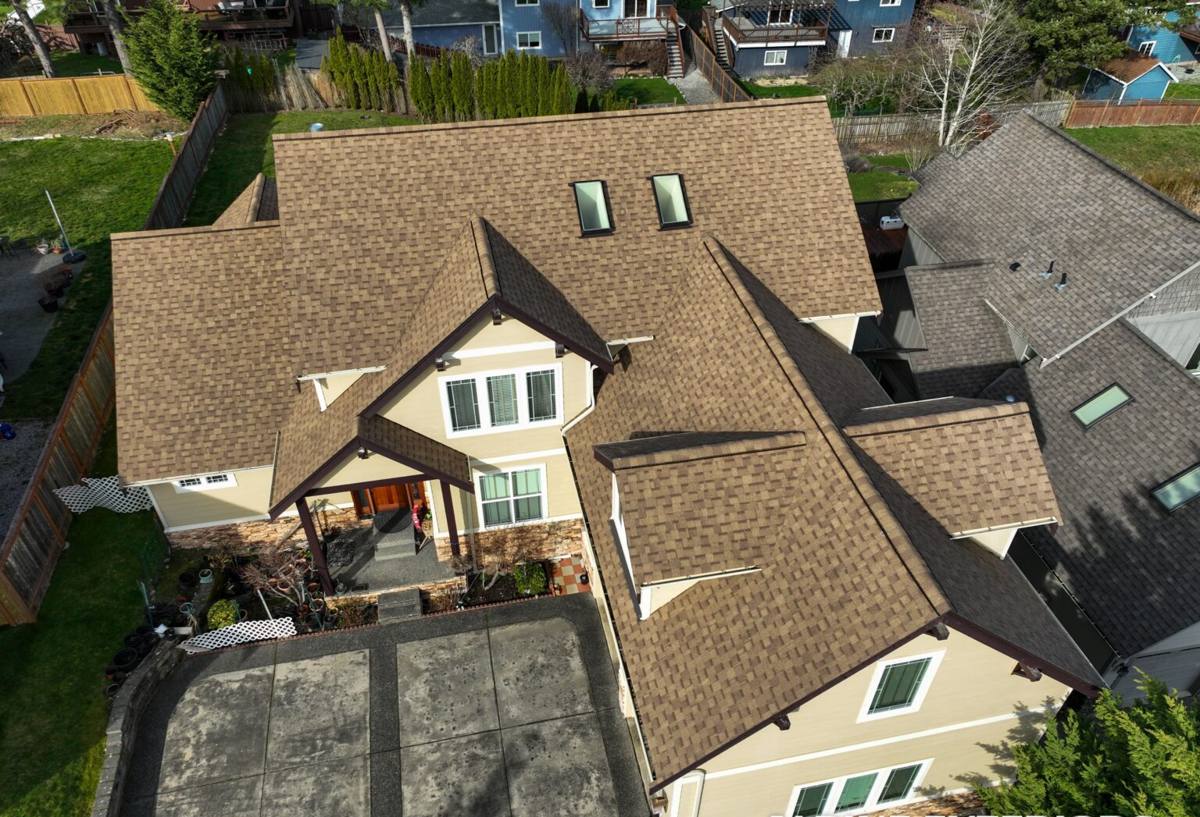
Signs a Rainier Valley Home Needs a New Roof, Not Another Repair
Roof repairs make sense when the damage is isolated — a cracked pipe boot, a handful of lifted shingles after a windstorm, a small flashing leak. A full replacement becomes the honest recommendation when the problems are systemic. Here's what typically tips that decision:
- Granule loss heavy enough that you're finding grit in gutters and downspouts every time it rains
- Shingles that are curling, cupping, or cracking across large sections rather than one localized spot
- Moss or algae growth that keeps returning within a season or two of cleaning, even after treatment
- Soft or spongy decking felt underfoot during an inspection, a sign moisture has reached the sheathing
- A roof at or past 20-25 years old, which is where most asphalt systems in this climate start failing structurally, not just cosmetically
- Daylight visible through the attic sheathing, or consistent staining on interior ceilings during heavy rain events
If a roof is showing two or more of these at once, patchwork repair usually ends up costing more over a few years than a properly sequenced replacement would have cost up front.
Roofing Materials That Actually Hold Up in This Climate
There's no single "best" roofing material for every Rainier Valley home — it depends on the roof's pitch, the home's age and structure, and the homeowner's budget and maintenance appetite. What matters is understanding the real trade-offs instead of marketing claims.
| Material | Moisture & Moss Resistance | Typical Lifespan (this climate) | Maintenance Needs |
|---|---|---|---|
| Architectural asphalt shingle | Good, with algae-resistant granules | 20-30 years | Periodic moss removal, gutter checks |
| Standing seam metal | Excellent — sheds water and moss fast | 40-60 years | Low; occasional fastener and seam checks |
| Composite/synthetic shake | Very good, engineered for wet climates | 30-50 years | Low to moderate |
| Cedar shake (untreated) | Fair — needs active upkeep to resist rot and moss | 20-30 years with maintenance | High; regular treatment and cleaning |
Asphalt shingle remains the most common choice for Rainier Valley homes because it balances cost, appearance, and performance well, provided it's installed with the right underlayment and ventilation package underneath. Metal roofing has gained ground here specifically because its smooth, low-friction surface gives moss far less to grip onto — a real advantage on shaded lots. We'll walk through the honest pros and cons for your specific roof rather than steering everyone toward one product.
A Note on Cedar Shake
Cedar shake has a real place in Pacific Northwest architecture and we respect homeowners who want it. Our professional standard is that it needs a documented maintenance plan — periodic treatment, cleaning, and inspection — to perform well in a climate this wet. Without that upkeep, moisture retention in the wood grain shortens its service life well below what a treated, maintained shake roof can achieve. We'll always be straight with you about that commitment before you commit to the material.
What a Correct New Roof Installation Actually Involves
A new roof is more than laying shingles over the old ones. Every layer underneath does specific work, and skipping or shortcutting one is where most premature roof failures start.
Tear-Off and Deck Inspection
We remove the existing roofing down to the deck rather than layering over it. This lets us actually see the sheathing — rot, delamination, and soft spots are common on older Rainier Valley homes where a roof sat under moss or standing moisture for years. Any damaged decking gets replaced before anything new goes down; installing new roofing over compromised sheathing just hides the problem for a few more years.
Underlayment
Given how much sustained rain this region sees, we use synthetic or self-adhered underlayment rated for high-moisture climates, with extra ice-and-water shield protection at eaves, valleys, and other vulnerable transitions — the places where wind-driven rain most often finds a way in.
Flashing
Flashing around chimneys, skylights, vent pipes, and roof-to-wall transitions is where the majority of leaks originate on older homes. We install new flashing rather than reusing old pieces, and we pay particular attention to any point where salt-laden coastal air could accelerate corrosion on metal components over time.
Ventilation
Proper intake and exhaust ventilation keeps the attic temperature and humidity balanced, which does two things: it extends the life of the roofing material from underneath, and it reduces the moisture buildup that feeds moss growth and wood rot. A lot of older Rainier Valley homes were built with minimal or blocked ventilation, and correcting that is often the single highest-value upgrade we make during a re-roof.
Our Installation Process, Step by Step
- On-site inspection and estimate — we walk the roof, check the attic, and document existing conditions before recommending anything
- Material selection — we go over the honest trade-offs for your roof pitch, home style, and budget
- Permitting — we handle the required permitting through the applicable jurisdiction so you don't have to navigate that process yourself
- Tear-off and disposal — old roofing removed and hauled off, deck inspected and repaired as needed
- Underlayment and flashing installation — the moisture-management layer that does the real work
- Roofing material installation — installed to manufacturer specification, which is what keeps material warranties valid
- Ventilation check and correction — intake and exhaust balanced for the attic's actual size and load
- Final walkthrough — we review the finished roof with you and answer any remaining questions before we consider the job done
What Drives the Cost of a New Roof
Every roof is different, but the cost of a new roof installation generally comes down to a handful of factors. Rather than quoting a number that doesn't mean anything without context, here's what actually moves the price:
| Factor | Why It Matters |
|---|---|
| Roof size and pitch | Steeper roofs take longer and require more safety setup and material |
| Material choice | Asphalt, metal, and composite products carry different material and labor costs |
| Deck condition | Rot or delamination found during tear-off adds repair scope |
| Number of penetrations | Chimneys, skylights, and vent stacks each need individual flashing work |
| Ventilation upgrades | Correcting inadequate attic ventilation adds scope but pays off long-term |
| Accessibility | Tight lots, mature trees, or limited staging space affect labor time |
We provide a written estimate that breaks these factors down for your specific roof, so you know exactly what you're paying for and why — not a flat number with no explanation behind it.
Permits, Codes, and Rainier Valley's Older Housing Stock
Seattle and King County both have permitting requirements for roof replacement, and the specifics can shift depending on the scope of work and the age of the structure. A meaningful share of homes in Rainier Valley were built decades ago, which means original framing and decking sometimes don't match current code assumptions — something that only becomes visible once the old roofing is off. We handle the permitting process and flag any code-related items we find during tear-off before proceeding, so there are no surprises added mid-project.
After Installation: A Simple Maintenance Checklist
A correctly installed roof still benefits from basic upkeep, especially in a climate that stays wet for months at a time. We leave every homeowner with guidance along these lines:
- Clear gutters and downspouts at least twice a year, more often under mature trees
- Have moss growth addressed early rather than letting it establish and spread
- Schedule a visual roof inspection after major windstorms
- Keep overhanging branches trimmed back to reduce shade, debris, and physical abrasion on the roofing surface
- Watch for any interior ceiling staining and address it immediately rather than waiting
Why a Crew That Already Works Rainier Valley Matters
A roof installed by a crew unfamiliar with this specific climate and housing stock can still look fine on installation day and still underperform within a few years. Knowing which valleys and shaded slopes in this neighborhood collect moisture, which older homes tend to have ventilation issues, and how the local permitting process actually works isn't something that shows up in a generic install — it comes from doing this work here, repeatedly, on homes like yours. That local familiarity is what keeps a project on schedule, keeps the estimate accurate instead of full of change orders, and keeps the finished roof performing the way it should through King County's wettest months.
If your Rainier Valley home is due for a new roof, or you're just not sure whether repair or replacement is the right call, we're happy to take a look and give you a straight answer. Reach out for a free, no-pressure estimate using the form below.