 Seattle
 Magnolia's Exposure Is Different From a Typical Seattle Lot
Magnolia sits out on its own peninsula, with more of its housing stock facing open water and unbroken wind than most Seattle neighborhoods enjoy — or endure, depending on which side of the siding you're standing on. Homes up on the bluffs get direct exposure to Puget Sound weather: salt-laden air, wind-driven rain that hits siding sideways instead of straight down, and a damp shoulder season that runs long even by King County standards. Lower, more sheltered blocks closer to the ship canal and the interior of the neighborhood deal with less wind but often more shade, which means slower drying times and a longer moss season on north-facing walls and trim.
Siding in Magnolia isn't fighting one climate problem — it's fighting several at once, and they don't hit every house the same way. That's the case for treating a Magnolia siding job as a Magnolia siding job, not a generic Seattle one.
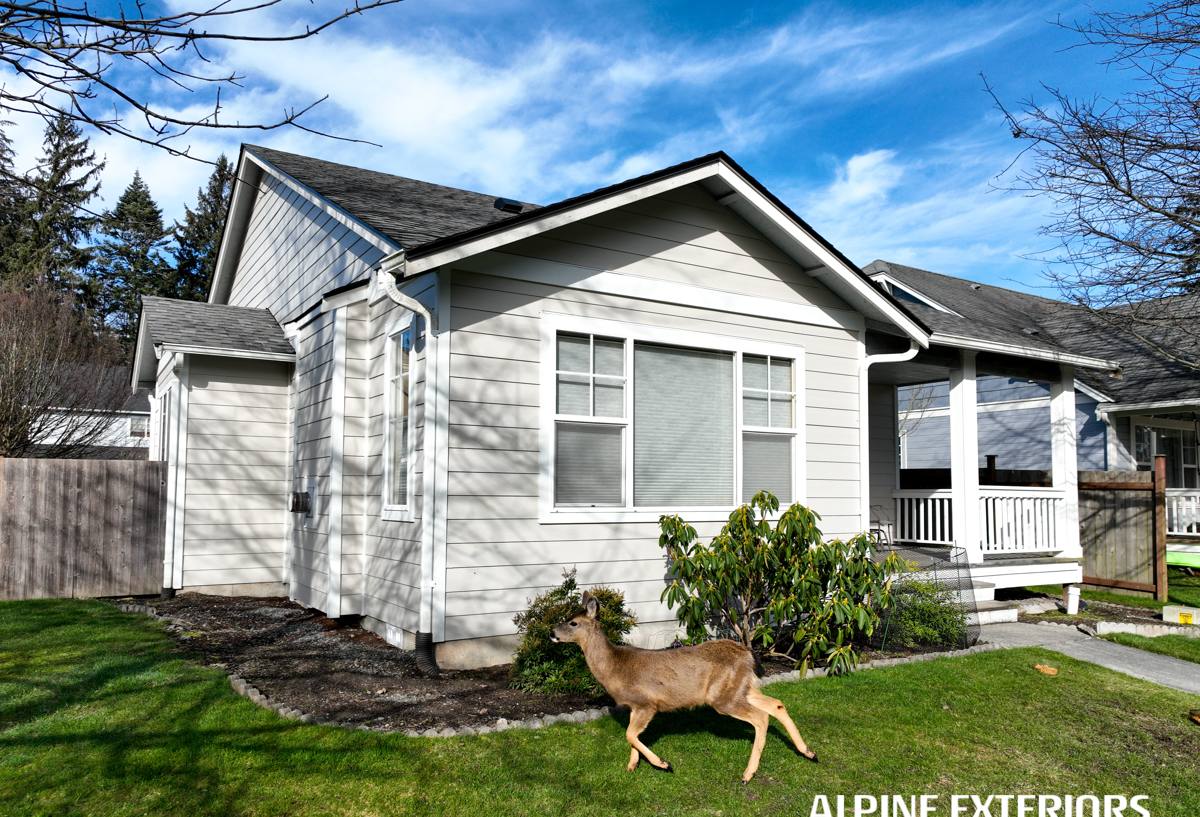
What Salt Air, Driving Rain, and Moss Actually Do to a Wall
Salt Air
Salt-laden air off the Sound accelerates corrosion on exposed metal — nail heads, flashing, fasteners, hose bibs, anything ferrous that isn't properly coated or capped. On a siding job, that means fastener choice and flashing material aren't cosmetic details; they're the difference between trim that looks fine at year three and trim that's staining and swelling at year three.
Driving Rain
Wind-driven rain doesn't behave like a normal rain shower. It gets pushed sideways and upward, finding its way behind trim boards, into butt joints, and up under window flashing that would stay dry in a calmer part of town. A siding system built for still-air rain simply isn't built for a bluff-top exposure in Magnolia.
Moss and Prolonged Dampness
Seattle's long wet season already favors moss and algae growth on north- and west-facing walls. Add tree cover, which much of Magnolia has in abundance, and some walls barely get a dry stretch from November through March. Moss holds moisture against the surface it's growing on — that's a problem for wood-based products, and it's a maintenance issue even for products that resist it structurally.
Why Fiber Cement Is the Right Call for This Exposure
Fiber cement doesn't rot, doesn't feed moss the way wood fiber does, and doesn't absorb water into its core the way engineered wood products can. It's also non-combustible, which matters less for a wet-climate discussion but is still part of why we standardized on it as our only siding product. We install James Hardie fiber cement exclusively — not vinyl, not primed wood, not engineered wood panel products like LP SmartSide, and not other fiber cement brands. That's a deliberate call, not a default: it lets us hold one installation standard, stock one set of trim and accessory details, and stand behind a single warranty structure instead of juggling several.
James Hardie engineers its siding by climate zone. For Western Washington's marine exposure, that means the HZ5 product configuration — formulated for a region that sees sustained moisture and moderate freeze-thaw cycling rather than the hurricane and humidity concerns other parts of the country deal with. The factory-applied ColorPlus finish matters here too: it's baked on under controlled conditions, which holds up better against driving rain and salt exposure than field-applied paint that has to cure in Seattle's damp air.
What a Correct Installation Involves
Fiber cement is a forgiving material in a lot of ways, but it's unforgiving of a sloppy install — especially on a wall that's going to take direct rain for nine months of the year. A correct job includes:
- A drainage plane (weather-resistant barrier) installed and lapped correctly, shingle-fashion, so water sheds outward rather than pooling behind the siding
- A rainscreen gap where wall assembly and exposure call for one, so any moisture that does get behind the cladding can drain and the wall can dry
- Flashing at every horizontal transition — window heads, trim boards, roof-to-wall intersections — installed to shed water past the siding, not rely on caulk to do that job
- Corrosion-resistant fasteners suited to a marine-influenced air environment, not standard interior-grade hardware
- Manufacturer-specified nailing patterns and clearances, including gaps at butt joints and ground clearance at the base of the wall
- Factory-cut and pre-primed edges wherever a cut piece is exposed, so raw fiber cement edges aren't left to absorb water
Skip any one of these and you don't necessarily see a failure right away — you see it in year four or five, as staining, soft trim, or paint failure that looks like a finish problem but is actually a water-management problem underneath.
How Our Process Works
Site Assessment
We start by looking at the specific exposure of your house — which walls take direct wind and rain, which stay shaded and damp, where the existing siding or trim shows signs of past moisture problems. A house on an open bluff and a house tucked into tree cover a few blocks away can need different detailing even though they're both "Magnolia jobs."
Tear-Off and Sheathing Check
Old siding comes off and we check the sheathing underneath before anything new goes up. This is where hidden moisture damage from a previous installation — often a failed weather barrier or missing flashing — actually gets found and dealt with, rather than sided over.
Weather Barrier and Flashing
We install the drainage plane and all flashing details before a single piece of Hardie board goes on the wall. This step is invisible once the job is done, which is exactly why it's the step that separates a durable install from one that looks fine for a few years.
Siding Installation
Hardie boards go up to manufacturer spec — nailing pattern, fastener type, joint treatment, clearances. We don't deviate from Hardie's published installation instructions, because that's what keeps the manufacturer's warranty intact if you ever need it.
Trim, Caulk, and Final Detail
Trim gets back-primed where cut, caulked only where caulk is the correct water-management tool (not as a substitute for flashing), and the whole assembly gets a final check for anything that could give wind-driven rain an entry point.
Product Options for a Magnolia Home
James Hardie's product lines cover most architectural styles found in Magnolia, from newer construction to older Craftsman and mid-century homes near the neighborhood's interior.
| Product | Look | Best Fit |
|---|---|---|
| HardiePlank lap siding | Traditional horizontal lap, various reveal widths | Craftsman, traditional, and most single-family homes |
| HardieShingle siding | Staggered or straight-edge shingle profile | Cottage and shingle-style homes common in older Seattle neighborhoods |
| HardiePanel vertical siding | Smooth or textured vertical panels | Modern builds, accent walls, gable ends |
| HardieTrim boards | Smooth fascia, frieze, and corner trim | Finishing detail on any of the above |
All of it is available in Hardie's ColorPlus finish palette, which matters in a neighborhood where salt air and sun exposure vary block to block — a factory finish holds color more evenly across those different exposures than a field-painted surface would.
What Drives the Cost
Every siding quote should be based on a walk of your actual house, but a few factors consistently move the number up or down on Magnolia jobs specifically:
| Factor | Why It Matters Here |
|---|---|
| Extent of hidden moisture damage | Bluff-exposed and older shaded walls more often need sheathing or framing repair once old siding comes off |
| Wall height and access | Multi-story homes on sloped bluff lots often need more scaffolding and staging time |
| Trim complexity | Craftsman-style detailing and multiple gable ends add labor beyond flat wall footage |
| Product line and profile | Shingle profile and specialty reveals cost more in material and install time than standard lap |
| Existing siding removal | Full tear-off of old wood or vinyl adds cost but is usually the right call over siding over problems |
Living With Fiber Cement Siding in a Marine Climate
Fiber cement doesn't need much upkeep, but "not much" isn't "none," especially with Magnolia's moss season and salt air. A yearly rinse-down of north- and west-facing walls keeps moss and algae from getting a foothold, and a quick visual check of caulk lines and trim joints after the wettest months catches small issues before they become water-intrusion problems. Because ColorPlus finish is baked on rather than field-applied, it holds up to that annual cleaning far better than a painted surface would — you're not stripping a fresh paint job every time you rinse the house.
Why a Crew That Already Works Magnolia Matters
Magnolia's mix of exposures — open bluff, sheltered interior, older housing stock, tree-shaded lots — means the "right" detailing isn't identical from block to block. A crew that's worked the neighborhood knows where to expect hidden moisture damage before tear-off even starts, understands Seattle's permitting and inspection process for exterior work, and isn't guessing at how a given wall's exposure should change the installation detail. That local familiarity shows up less in the sales pitch and more in the parts of the job you never see once the siding is up — the flashing, the drainage plane, the fastener choice — which is exactly where a marine-climate siding job is won or lost.
If you're weighing a siding replacement or repair in Magnolia, we're happy to walk the house, look at your specific exposure, and put together a straightforward, no-pressure estimate — no obligation, just an honest look at what your home actually needs.