 Seattle
 Why Ravenna Homes Need Siding Built for This Climate
Ravenna sits under a heavy tree canopy near Green Lake and the University District, which gives the neighborhood its charm and also its siding problem: shade, moisture, and organic debris in equal measure. Seattle's marine air brings driving rain off the Sound, long stretches of overcast humidity, and a moss season that can run from October through May. Add mature maples and conifers dropping needles and leaf litter into gutters and wall cavities, and you have a recipe for siding that stays damp far longer than it should. Wood-based products struggle here. Vinyl expands, contracts, and gaps at the seams. James Hardie fiber cement siding was engineered specifically for climates like this one, which is why it's the only product we install.
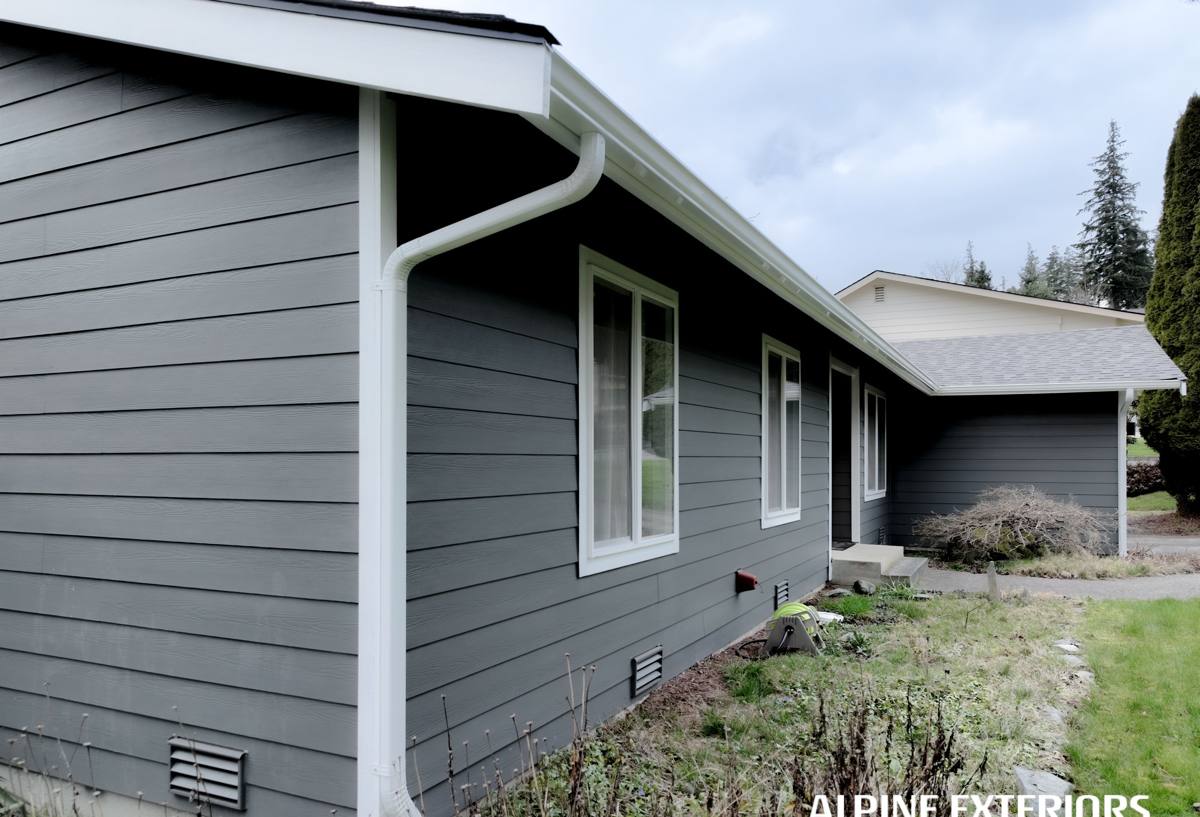
What Ravenna's Weather Actually Does to Siding
It helps to understand the mechanism, not just the symptom. Seattle doesn't get the sustained deluges of the Gulf Coast, but it gets something arguably harder on siding: weeks of low-grade moisture exposure with limited drying time between rain events. In shaded lots like much of Ravenna, walls facing north or tucked under tree cover can stay damp for days after a storm passes.
The three local stressors we plan around
- Driving rain: wind-driven moisture pushes water sideways into laps, seams, and trim joints, not just straight down the wall face.
- Moss and algae growth: constant shade plus moisture creates ideal conditions for organic growth on any surface that holds a film of water, including paint and caulk lines.
- Slow dry-out cycles: tree cover blocks sun and wind that would otherwise dry a wall between storms, extending the window where trapped moisture can do damage.
None of this is unique to Ravenna, but the density of mature trees in this part of Seattle makes the effect more pronounced than in more open King County neighborhoods. A siding system that tolerates occasional dampness is fine elsewhere; here, it needs to tolerate near-constant dampness for a good chunk of the year.
Why James Hardie Fiber Cement Is the Right Fit
James Hardie siding is a cement, sand, and cellulose fiber composite that does not absorb and swell the way wood-based products do, and it does not expand and contract with temperature the way vinyl does. It's also non-combustible, which matters as wildfire smoke and fire-season awareness have become a bigger part of Pacific Northwest homeowner conversations even in dense urban neighborhoods like Ravenna. For a wet, shaded, older-housing-stock area, the relevant advantages are:
- Dimensionally stable in wide humidity swings, so laps and joints stay tight over time
- Factory-applied ColorPlus finish resists the fading and moss-friendly chalkiness that field-applied paint develops faster in shade
- Rated product lines (HZ5 for this region) engineered around Pacific Northwest freeze-thaw and moisture cycles
- A warranty structure built around the product performing correctly when installed to Hardie's specifications
We don't install LP SmartSide, vinyl, Cemplank, Allura, primed spruce, or cedar. Each of those has legitimate uses somewhere, but for the specific combination of moisture load, shade, and moss pressure that Ravenna homes deal with, we've standardized on Hardie because it holds up with the least ongoing maintenance burden.
HZ5: The Product Line Engineered for This Region
James Hardie makes climate-specific product formulations called HZ (HardieZone) products, and King County falls into the HZ5 zone, which is engineered for regions with significant moisture exposure and freeze-thaw cycling. HZ5 boards are formulated to resist moisture-related issues like cracking and warping better than a generic, one-size-fits-all fiber cement product would in this climate. When we quote a Ravenna project, we're specifying HZ5 boards, not a lower-grade product substituted to save cost. That distinction matters more here than in a drier climate, where the difference would show up far less over the life of the siding.
What a Correct Installation Actually Involves
Fiber cement siding is only as good as its installation. Hardie's own data and warranty terms both point to installation error, not product failure, as the most common cause of premature siding problems. A correct job in a wet, shaded neighborhood like Ravenna includes several details that are easy to skip and expensive to fix later.
The details we don't skip
- Proper drainage plane and weather-resistive barrier behind the siding, so any moisture that does get past the cladding has somewhere to go
- Correct fastener type, spacing, and placement per Hardie's installation manual, not generic siding nailing patterns
- Minimum clearances from grade, roof lines, decks, and other siding-to-surface transitions, so standing water and splash-back don't sit against the bottom edge of the board
- Properly flashed and caulked butt joints, trim, and penetrations — the number one place we see moisture intrusion on older, poorly installed siding
- Correct gapping at joints to allow for expansion without forcing water into the seam
- Factory-cut edges primed and sealed wherever field cuts expose raw fiber cement
Every one of these details matters more in a climate that doesn't give a wall much chance to dry out. A gap that would be a cosmetic nuisance in a dry climate becomes a moisture entry point here.
Signs Ravenna Homeowners Should Watch For
| What You See | What It Usually Means | Urgency |
|---|---|---|
| Dark green or black film on siding, especially north-facing walls | Moss/algae growth from prolonged shade and moisture | Low — cosmetic, but monitor for spread into seams |
| Soft or spongy spots when pressed | Underlying moisture damage, common on wood-based siding near ground contact | High — schedule an inspection |
| Paint peeling in sheets rather than fading evenly | Moisture trapped behind the paint film, often at seams or laps | Medium to high depending on extent |
| Visible gaps opening at butt joints or trim | Material movement or original installation without proper gapping | Medium — a common entry point for water |
| Staining below window sills or trim | Failed or missing flashing | High — active water path |
Our Process for a Ravenna Siding Project
1. On-site assessment
We walk the property, check the current siding for moisture damage at grade level, deck ledgers, window and door penetrations, and any areas under heavy tree cover. We also look at the existing weather barrier condition where it's accessible.
2. Scope and product selection
We spec HZ5 Hardie boards in the plank profile, panel system, or shingle-style product that fits the home, along with ColorPlus factory finish or a paint-grade option depending on the homeowner's preference, and confirm trim, corner, and flashing details before work starts.
3. Tear-off and substrate check
Old siding comes off and we inspect the sheathing underneath for rot or damage before anything new goes up. This is often where problems from a prior installation surface, and it's better to find them now than after the new siding is closed in.
4. Weather barrier and flashing
A new drainage plane and flashing at every penetration, window, door, and horizontal transition goes in before the first board. This step is invisible once the job is done, which is exactly why it's the step most likely to get shortcut by crews unfamiliar with the product.
5. Installation to Hardie spec
Boards go up with correct fastening, gapping, and clearances, following James Hardie's published installation guidelines for the HZ5 zone.
6. Final detailing and cleanup
Caulking, touch-up at field cuts, and a full site cleanup, including debris from the tear-off, close out the job.
Why a Crew That Already Works Ravenna Matters
Ravenna's housing stock is a mix of early-to-mid-20th-century homes and infill construction, often on lots with mature landscaping and limited access on at least one side of the house. A crew that regularly works this neighborhood knows how to stage material and scaffolding around tight side yards and tree roots without damaging landscaping, understands Seattle's permitting expectations for exterior work on older homes, and has a realistic sense of how long moss and moisture have likely been affecting a given wall based on its orientation and shade exposure. That local pattern recognition shortens the assessment phase and reduces surprises once tear-off starts.
Maintenance That Actually Matters Here
James Hardie siding is low-maintenance, not no-maintenance. In a shaded, moss-prone neighborhood like Ravenna, a short annual routine goes a long way:
- Rinse siding annually with a garden hose and soft brush, focusing on north-facing and heavily shaded walls where moss takes hold first
- Keep gutters clear of leaf litter so overflow doesn't run down the wall face
- Trim back vegetation and tree limbs that keep a wall section constantly shaded and damp
- Inspect and re-caulk trim joints every few years, since caulk fails well before the siding itself does
- Address any paint chalking or peeling promptly rather than waiting, since exposed edges are where moisture gets a foothold
Cost Factors for a Ravenna Project
| Factor | Why It Affects Price |
|---|---|
| Tear-off complexity | Multiple layers of old siding or hidden rot add labor time |
| Site access | Tight side yards, mature trees, and sloped lots common in Ravenna can require extra staging |
| Product line and finish | HZ5 plank, panel, or shingle profiles and ColorPlus vs. field-paint finish carry different material costs |
| Trim and detail work | Older homes often have more window and trim detail to flash and finish correctly |
| Substrate repair | Any rot found at tear-off needs to be repaired before new siding goes up |
We give firm numbers only after seeing the house in person, since siding pricing without an on-site look is a guess either way.
If your Ravenna home's siding is showing moss, peeling paint, or soft spots, or you're planning ahead for a replacement, we're happy to walk the property and give you a straight, no-pressure estimate using the form below.