 Seattle
 Siding Replacement for Green Lake Homes
Green Lake's mix of early 1900s bungalows, mid-century ramblers, and newer infill homes all share one thing in common: siding that has to survive a wet, mossy, marine-influenced climate for decades without constant babysitting. If you're noticing soft spots near your foundation line, paint that won't hold, or trim that's gone spongy, you're not imagining it — that's what King County's weather does to siding that's past its service life.
This page covers what siding replacement actually involves for a Green Lake property, what correct installation looks like, and why we install exclusively James Hardie fiber cement rather than the wider range of products other contractors offer.
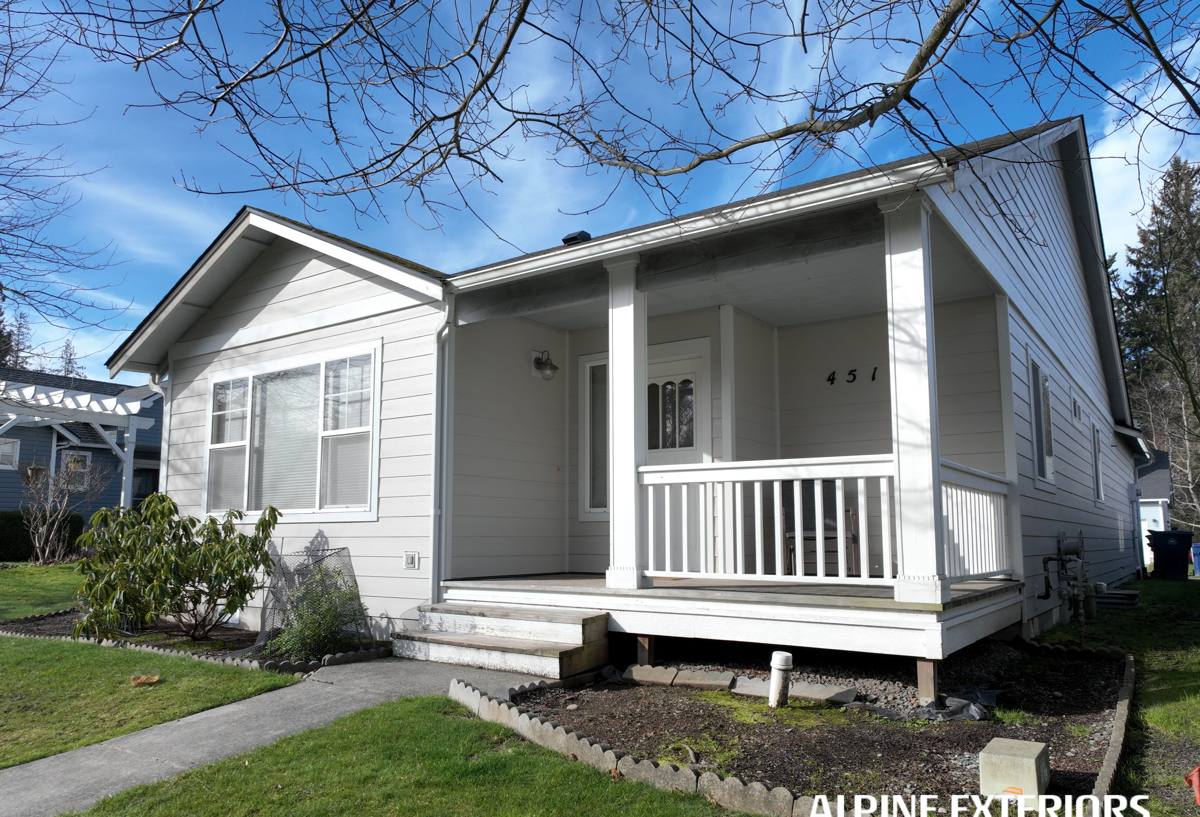
Why Green Lake's Climate Is Hard on Siding
Seattle sits close enough to Puget Sound that homes throughout the city, including Green Lake, deal with salt-tinged air moving in off the water. Combine that with our long stretch of driving rain from fall through spring, and siding here is under near-constant moisture pressure for a good chunk of the year. Add the shade from mature trees around the lake and in older Green Lake yards, and you get a moss season that can run six months or longer on north-facing walls and anything under a tree canopy.
None of that is exotic — it's just steady, cumulative wear. But it adds up differently depending on what the siding is made of:
- Wood-based products (cedar, primed spruce, engineered wood) absorb moisture at cut edges and fastener holes, and once moss or algae take hold, that moisture gets trapped against the surface longer.
- Vinyl doesn't rot, but it moves with temperature swings, can crack in cold snaps, and gives you no real defense against the salt-air corrosion on fasteners and trim if not detailed correctly.
- Fiber cement, done right, sheds water at the laps, resists moss staining better than wood, and doesn't feed mold and mildew the way organic materials can.
The takeaway for Green Lake homeowners: the material choice matters more here than it would in a drier climate, and so does the quality of the installation underneath it.
Signs Your Green Lake Home Needs Siding Replacement
Not every siding problem means a full replacement, but these are the signs that patching won't hold:
- Soft, spongy, or crumbling siding when pressed, especially at the bottom courses and around window sills
- Persistent moss or dark streaking that comes back within weeks of cleaning
- Paint that's peeling or bubbling in patterns following seams and butt joints
- Visible gaps, warping, or buckling panels
- Interior signs — musty smells, staining, or soft drywall near exterior walls
- Rising heating bills that point to a failing weather barrier behind the siding
If you're seeing two or more of these, it's worth getting a straight answer on whether you're looking at a repair or a full re-side.
What a Correct Siding Replacement Involves
Siding is a system, not just a surface. A replacement done right in a wet climate like ours includes several layers working together, and skipping any one of them is where premature failures start.
Tear-Off and Inspection
We remove the old siding down to the sheathing and inspect for hidden rot, especially around windows, doors, and any spot where past water intrusion may have gone unnoticed. This is often the first real look anyone's had at the wall assembly in decades, and it's the point where problems get fixed instead of covered up again.
Water-Resistive Barrier and Flashing
A weather-resistive barrier goes over the sheathing, with flashing detailed at every window, door, and penetration so water is directed out and down rather than behind the cladding. In a climate with as much driving rain as Green Lake gets, flashing details are where most long-term failures either get prevented or guaranteed.
Fastening and Clearances
Fiber cement siding has manufacturer-specified nailing patterns, clearances from grade, decks, and roof lines, and gapping requirements at trim and corners. These aren't cosmetic preferences — they're what keeps water from wicking into end grain or pooling where it can't dry out.
Factory Finish
We install ColorPlus factory-finished siding, which means the color and protective coating are baked on before the boards ever reach your house, rather than field-painted after installation. That gives a more consistent, longer-lasting finish than job-site painting can typically achieve.
Why We Install Only James Hardie Fiber Cement
Homeowners in Green Lake sometimes ask why we don't offer LP SmartSide, vinyl, Cemplank, Allura, or bare cedar and primed wood siding the way some other contractors do. It's a fair question, and the honest answer is that we made a standard for ourselves and stuck to it.
Each of those alternatives has real strengths — vinyl is inexpensive and low-maintenance in the right setting, engineered wood products can look and install similarly to fiber cement, and cedar has genuine curb appeal for the right buyer. But we've weighed those against what actually holds up over 20-plus years in a Puget Sound climate with salt air, heavy rain, and long moss seasons, and fiber cement is where we've landed as our standard:
- Non-combustible — fiber cement doesn't contribute fuel to a fire the way wood-based products can, which matters for insurance conversations as much as safety.
- Moisture-stable — it doesn't swell, rot, or delaminate the way wood and some engineered products can when installation isn't perfect or maintenance slips for a season.
- Moss and algae resistance — the factory finish and material composition hold up better against the kind of shaded, damp conditions common around Green Lake.
- Climate-engineered product lines — Hardie's HZ5 formulation is specifically engineered for cold, wet climates like ours, rather than a one-size-fits-all product.
- Warranty strength — a long, transferable warranty that adds real value if you sell the home down the road.
We don't say this to talk down the alternatives — we say it because narrowing our focus to one product line lets us install it correctly every time, rather than juggling different systems with different failure points.
Comparing Siding Options for a Green Lake Home
| Factor | James Hardie Fiber Cement | Vinyl | Wood / Engineered Wood |
|---|---|---|---|
| Moisture resistance in PNW rain | Strong when installed to spec | Good, but seams and fasteners need care | Moderate — vulnerable at cut edges and joints |
| Moss/algae resistance | Strong | Moderate | Weaker without ongoing treatment |
| Fire resistance | Non-combustible | Combustible | Combustible |
| Finish longevity | Factory ColorPlus finish, long repaint intervals | Color molded in, can fade over time | Needs regular repainting/staining |
| Typical lifespan with proper install | 30+ years | 20-30 years | Varies widely by upkeep |
Our Process for a Green Lake Siding Replacement
- On-site assessment — we walk the exterior, check for hidden moisture damage, and talk through what we find in plain terms.
- Written estimate — scope, product line, color, and cost broken down so there's no guessing.
- Tear-off and sheathing repair — old siding removed, any rotted sheathing replaced before anything new goes up.
- Weather barrier and flashing — installed per manufacturer and code requirements at every penetration.
- Hardie installation — fastened, gapped, and finished to manufacturer spec.
- Final walkthrough — we go over the finished work with you before calling the job done.
Cost Factors for Siding Replacement
Every Green Lake home is different, but the main things that move the price are consistent:
- Total square footage and number of stories
- Amount of trim, window and door detailing, and architectural features
- Condition of the sheathing underneath — hidden rot repair adds cost but isn't optional if found
- Siding profile chosen (lap, shingle-style, panel) and color
- Access — tight lots, mature landscaping, or steep grades near the lake can affect labor
We give a firm written number after seeing the house, not a vague range over the phone.
Why a Crew That Works Green Lake Already Matters
Siding failures in this neighborhood tend to follow a pattern — north-facing walls under tree cover, ground-contact clearance issues on older lots, and flashing that was never quite right around older window retrofits. A crew that's worked in Green Lake and similar Seattle neighborhoods has already seen these patterns and knows where to look before problems become expensive. That local familiarity, paired with sticking to one product system we know inside and out, is how we keep installs consistent from house to house.
If your siding is showing its age, we're happy to take a look and give you a straight assessment — no pressure, no obligation. Fill out the form below for a free estimate on your Green Lake home.