 Seattle
 Green Lake's Climate Is Harder on Siding Than It Looks
Green Lake is one of Seattle's most walkable, tree-covered neighborhoods, and that's exactly what makes it a tough environment for exterior siding. Mature maples and conifers shade large stretches of many lots for most of the day, homes sit close together on narrow lots that limit airflow, and the lake itself keeps humidity elevated well past what you'd get a mile inland. Add in the Puget Sound region's driving winter rain and the fine salt-laden air that moves through the greater Seattle basin off the Sound, and you have siding conditions that punish anything that isn't dimensionally stable and properly moisture-managed.
Homeowners in Green Lake tend to notice the same handful of problems: paint or coatings that fail early on the north and west-facing walls, soft spots at the bottom courses where splashback and shade keep wood-based products wet, and a slow but steady buildup of moss and green algae film anywhere sunlight doesn't reach. None of that is unusual for this part of King County — it's just what a long, wet, shaded season does to exterior materials over years of exposure.
Why James Hardie Fits a Neighborhood Like This
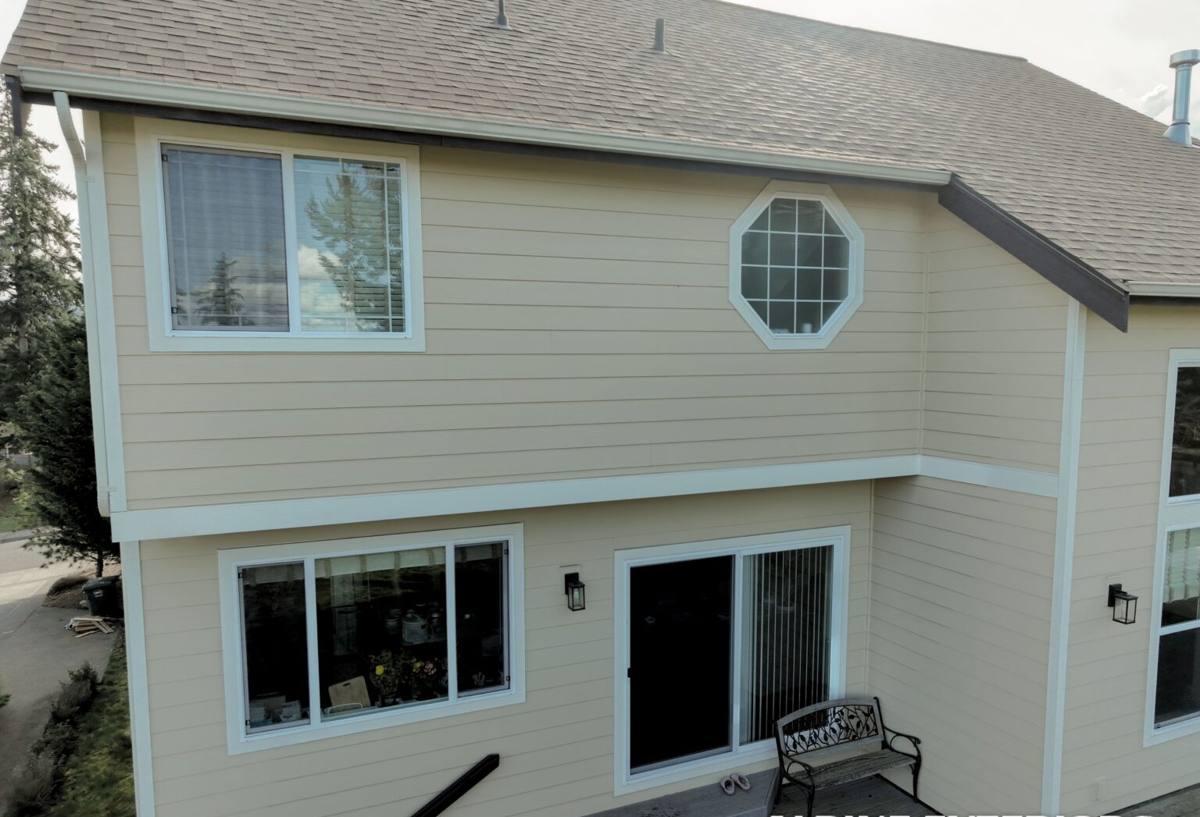
We install James Hardie fiber cement exclusively, and Green Lake is a good example of why. Hardie's siding is engineered from cement, sand, and cellulose fiber — it doesn't absorb and swell with moisture the way wood-based or wood-fiber products can, and it won't feed the rot and insect problems that come with sustained dampness under a tree canopy. It's also non-combustible, which matters to insurers and to homeowners thinking about wildfire smoke and ember exposure during dry summer stretches, even in a generally wet climate like Seattle's.
HZ5 Engineering for Marine Exposure
James Hardie makes region-specific product formulations, and the Pacific Northwest falls under their HZ5 climate zone — engineered for higher moisture exposure than the standard formulation used in drier parts of the country. For a lake-adjacent, shade-heavy property, that's not a marketing detail; it's the difference between siding that's matched to your actual exposure and siding that's just "good enough" for an average climate.
ColorPlus Finish
Hardie's ColorPlus finish is baked on in a controlled factory environment rather than field-sprayed, which gives it better fade resistance and adhesion than most job-site paint jobs. In a neighborhood where UV exposure is inconsistent — full sun on one elevation, deep shade on another — a factory finish holds color more evenly across the whole house than site-applied paint typically does.
The Moss and Algae Reality Under Green Lake's Tree Canopy
Moss and algae don't rot fiber cement the way they can compromise wood siding over time, but they still matter for appearance and for how water moves across a wall. A siding system that traps moisture behind it — through poor flashing, missing rainscreen gaps, or caulked joints where there should be drainage — will grow moss and algae faster and hold it longer than a system that's built to dry out between rain events.
This is where installation quality outweighs product choice. Two houses with identical Hardie siding can perform very differently in a shaded Green Lake yard depending on whether the crew built in proper drainage and clearances or just nailed panels to the sheathing. We treat the drainage plane and moss-prone north walls as the areas that need the most attention, not an afterthought.
What a Correct Installation Actually Involves
Fiber cement is a forgiving material in the sense that it won't rot from a minor installation mistake the way wood can — but it is unforgiving of moisture mistakes over time, because those mistakes show up as trapped water behind the cladding, stained trim, or premature caulk failure. A correct Hardie installation in a climate like ours includes:
- A code-compliant water-resistive barrier installed with proper shingle-lap sequencing, not just stapled up and covered
- A drainage gap (rainscreen) behind the siding so bulk water and condensation can drain and the wall can dry, especially on shaded elevations
- Correct fastener type, size, and placement per Hardie's published fastening schedule — under- or over-driven nails are one of the most common causes of early failure
- Proper clearance from grade, roof lines, decks, and hardscape — Hardie specifies minimum gaps that get skipped constantly on rush jobs
- Flashing at every window, door, and penetration, integrated with the water-resistive barrier rather than sealed over with caulk alone
- Factory-cut joints and Hardie-approved joint treatment, not just butted boards caulked shut
Any one of these done wrong can shorten the life of an otherwise excellent product by years. This is also why we don't split our crews between multiple siding brands — installing Hardie correctly, especially in a wet, shaded microclimate, takes repetition and consistency that gets diluted when a crew is also learning vinyl or a different fiber cement brand's quirks.
How Hardie Compares to Other Siding Options Homeowners Consider
| Factor | James Hardie Fiber Cement | Vinyl | Wood / LP-Style Products |
|---|---|---|---|
| Moisture behavior in shade | Stable; engineered HZ5 formulation for wet climates | Doesn't absorb moisture, but can trap it behind panels | Prone to swelling, rot in prolonged shade and dampness |
| Finish durability | Factory-baked ColorPlus finish | Color molded through, can fade and chalk | Field-applied paint/coating; needs recoating over time |
| Fire resistance | Non-combustible | Combustible, can soften/deform near heat | Combustible |
| Maintenance in a mossy climate | Periodic wash; material itself doesn't decay | Periodic wash; brittle in cold, can crack | Regular inspection for soft spots, recaulking, repainting |
| Warranty structure | Long-term, transferable manufacturer warranty | Varies widely by manufacturer and grade | Varies; often shorter or prorated |
We're not going to tell you every other product is unusable — vinyl and wood-based sidings both have legitimate uses and price points. But for the specific combination of tree cover, humidity, and driving rain that Green Lake properties deal with, fiber cement engineered for this climate has consistently held up better than the alternatives, which is why it's the only product we put our name behind.
Our Process for a Green Lake Hardie Project
Every home is different, but the sequence of a proper installation is consistent:
- Site walk and assessment — we look at shading patterns, drainage around the foundation, existing moisture damage, and how the current siding was flashed and fastened
- Tear-off and sheathing inspection — we don't cover up rot, soft sheathing, or old moisture damage; problems get addressed before new siding goes on
- Water-resistive barrier and rainscreen installation — this is the layer that determines how the wall performs for the next several decades, and it doesn't get shortcut
- Flashing at every opening and penetration — windows, doors, hose bibs, vents, and roof-to-wall transitions
- Hardie panel or lap siding installation — fastened to Hardie's specification, with correct clearances maintained at grade, decks, and roofline
- Trim, caulking, and final ColorPlus touch-up — using Hardie-approved sealants and touch-up products so the factory finish isn't compromised
- Final walkthrough — we go over clearances, drainage, and warranty registration with you directly
Timing Around Seattle Weather
We schedule Green Lake siding work around the drier stretches of the year where possible. Fiber cement can be installed in a wider range of conditions than some materials, but a dry substrate before closing up the wall matters, and we won't rush that step just to hit a date.
Why a Crew That Already Works Green Lake Matters
Green Lake's housing stock skews toward older Craftsman-era and mid-century homes on tighter lots, often with mature landscaping that limits access and staging space. A crew that regularly works this neighborhood already knows how to plan material staging and tear-off on a narrow lot, how to protect established landscaping during the work, and what the existing wall assemblies in homes of this era typically look like once the old siding comes off. That familiarity shows up in fewer surprises mid-project and a cleaner, faster job site — not in anything mysterious, just in not having to relearn the basics of the neighborhood on your house.
Keeping Your New Siding Looking Right
Once Hardie siding is installed correctly, upkeep in a Green Lake microclimate is straightforward: an occasional low-pressure wash to keep moss and algae from building up on shaded walls, a visual check of caulking and trim after severe weather, and prompt attention if you ever notice a soft spot near grade or a downspout (usually a sign of a gutter or grading issue, not a siding failure). Fiber cement doesn't need repainting on the schedule that wood siding does, which is a real, ongoing savings over the life of the product.
If you're weighing a siding replacement on a Green Lake home, or dealing with an older siding system that's struggling with the shade and moisture in your yard, we're happy to take a look and give you an honest read on what your house needs. Reach out for a free, no-pressure estimate using the form below.