 Seattle
 Fremont's Climate Puts Real Stress on a Shingle Roof
Fremont sits close enough to Puget Sound and the ship canal that salt-laden air is a regular part of the weather mix, not an occasional event. Combine that with Seattle's driving winter rain, which rarely falls straight down and instead gets pushed sideways into laps, flashing, and vent penetrations, and you have two forces working against a roof at the same time. Add the tree canopy that gives many Fremont blocks their shade and character, and you get a long moss season that keeps roof surfaces damp well after the rain has stopped.
None of these factors is unusual on its own. Most homes around King County deal with some version of rain, shade, or moisture. What makes Fremont roofs work harder is the combination — salt air accelerating corrosion on fasteners and flashing, rain finding any weak seam, and moss holding moisture against the shingle surface for months at a stretch. A roof that would perform fine in a drier, sunnier part of the state can fall behind quickly here if it wasn't built with this specific mix in mind.
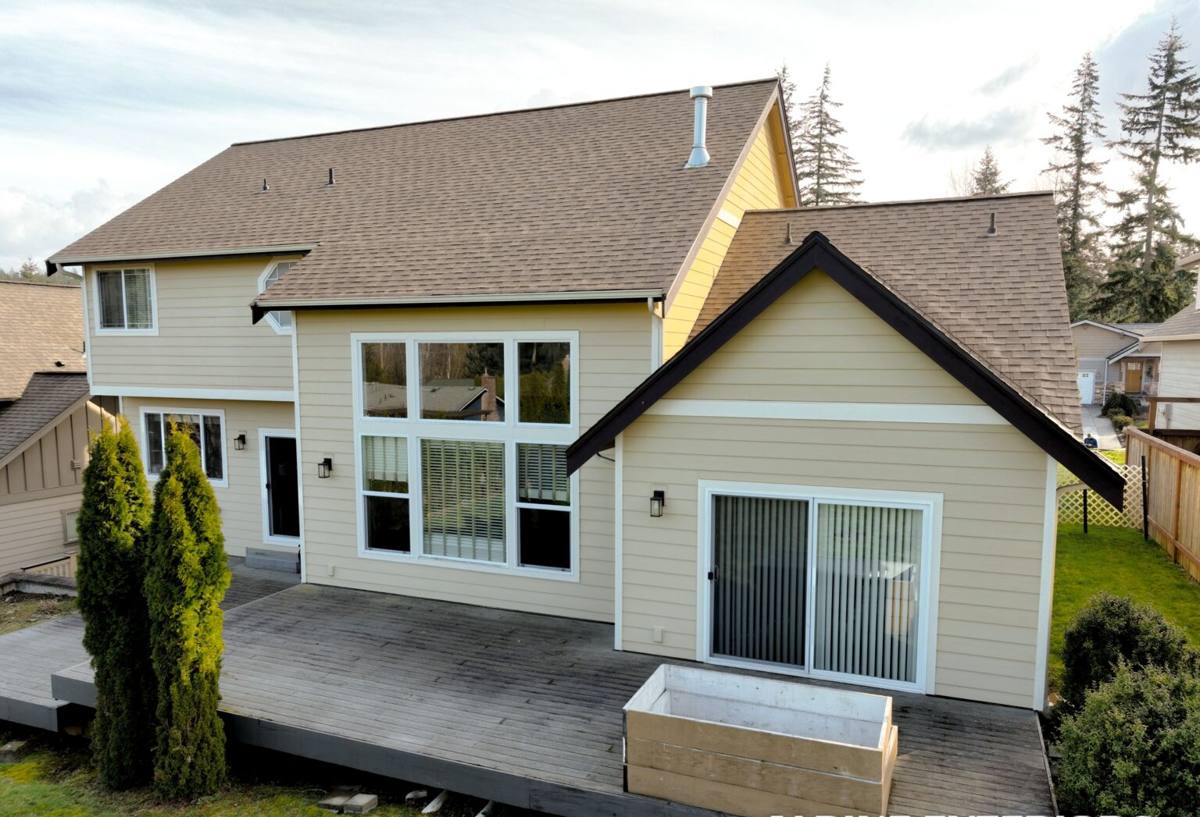
What a Correctly Installed Roof Needs to Handle That Combination
An asphalt shingle roof is a system, not just a layer of shingles nailed to plywood. In a neighborhood like Fremont, the details underneath and around the shingles matter as much as the shingles themselves.
Underlayment and Ice-and-Water Protection
A synthetic underlayment resists moisture far better than old-style felt, and it should be paired with self-adhering ice-and-water membrane at the eaves, valleys, and any low-slope transitions — the spots where wind-driven rain and standing meltwater are most likely to find a way in. This isn't overkill for our area; it's a baseline for a roof that's going to be rained on for months at a time every year.
Ventilation That Actually Moves Air
Balanced intake and exhaust ventilation keeps the attic close to outdoor temperature and lets moisture escape instead of condensing on the underside of the roof deck. A roof that traps warm, moist air underneath the shingles will show premature curling, deck rot, and mold long before the shingles themselves wear out. This is one of the most common shortcuts on older re-roofs, and it's one of the first things we check.
Flashing, Valleys, and Penetrations
Step flashing at walls and chimneys, properly lapped valley metal, and correctly sealed pipe boots and vent flashing are what actually stop water — the shingles mostly shed it. Salt air speeds up corrosion on cheap or improperly lapped metal flashing, so we use flashing details and materials built to hold up over the long haul rather than the fastest, cheapest option.
Signs Your Fremont Roof Is Telling You Something
Asphalt shingle roofs rarely fail all at once. They usually give warnings for months or years before a leak shows up inside the house.
- Moss growing along ridge lines, in valleys, or on the shaded (usually north-facing) slope of the roof
- Granules collecting in gutters or downspouts, leaving shingles looking patchy or bare
- Shingle edges curling upward or cupping in the middle
- Dark streaking that isn't just dirt — often algae growth feeding on the shingle's limestone filler
- Soft or spongy spots when walking the roof, a sign of a compromised deck underneath
- Daylight visible through the roof deck from inside the attic, or water stains on attic sheathing
- Ceiling stains or peeling paint on an upper floor, usually a sign water has already been getting in for a while
Catching any of these early is almost always cheaper than waiting for an active leak, since moss and trapped moisture do their damage slowly and quietly under the shingle surface.
Our Asphalt Shingle Roofing Process
We approach every Fremont roofing job the same methodical way, whether it's a full replacement or a targeted repair.
- Inspection and assessment. We walk the roof, check the attic, and look at flashing, ventilation, and deck condition before recommending anything — not just the shingles from the ground.
- Tear-off and deck inspection. Old shingles and underlayment come off completely so we can see the actual condition of the plywood or plank decking underneath, rather than covering up problems.
- Deck repair. Any soft, delaminated, or rotted decking is replaced before anything new goes down. Installing new shingles over a compromised deck just guarantees an early repeat.
- Underlayment and flashing. Ice-and-water membrane at vulnerable areas, synthetic underlayment across the field, and new flashing at all valleys, walls, and penetrations.
- Shingle installation. Installed to the manufacturer's nailing and exposure specifications, which is what keeps warranties valid and keeps the roof performing as designed in wind and rain.
- Ventilation and ridge details. Ridge vents or other exhaust ventilation installed or corrected as part of the job, not treated as an afterthought.
- Cleanup and walkthrough. Full site cleanup including a magnetic sweep for nails, followed by a walkthrough so you understand what was done and what to expect going forward.
Choosing a Shingle Built for This Climate
Not every asphalt shingle is a good fit for a shaded, damp, salt-air neighborhood. The table below compares common options in terms that matter here — not marketing claims, but how they actually hold up.
| Shingle Type | Typical Lifespan | Moss/Algae Resistance | Best Fit |
|---|---|---|---|
| Standard 3-tab | Shorter end of the asphalt range | Standard, no added resistance | Budget-driven projects on sunnier, less shaded roof planes |
| Architectural/laminate | Mid-to-long range | Better if algae-resistant granules specified | Most Fremont homes; better wind and weather performance |
| Algae-resistant (copper/zinc granules) | Same as base shingle line | Higher resistance to streaking and growth | Shaded roof planes and tree-covered lots |
| Impact-rated (Class 4) | Long range, added durability | Depends on granule type, often available with algae resistance | Homeowners prioritizing long-term durability and insurance considerations |
We don't push one brand or product line as the only correct answer. The right choice depends on how much shade your roof gets, how long you plan to stay in the home, and what balance of upfront cost versus long-term maintenance makes sense for you. What we won't do is install a product that looks fine on day one but creates a maintenance headache in a wet, shaded climate — we'd rather explain the trade-offs honestly upfront.
Keeping Moss and Moisture From Shortening Your Roof's Life
Even a well-installed roof needs some routine attention in a neighborhood like Fremont. A little maintenance goes a long way toward getting the full lifespan out of your shingles.
- Trim back tree limbs that overhang the roof to cut down on shade, debris, and moss spores
- Keep gutters and downspouts clear so water isn't backing up under the shingle edge
- Have moss removed with a gentle, low-pressure method rather than pressure washing, which can strip granules and shorten shingle life
- Check flashing around chimneys, skylights, and vents at least once a year for lifted edges or failed sealant
- Confirm attic ventilation is clear and unblocked, especially after insulation work
- Address moss and algae growth promptly rather than letting it establish for another wet season
What Shapes the Cost of a Fremont Roofing Project
Every roof is different, so we'd rather walk your specific roof than quote a number that doesn't apply to your house. A few factors consistently move the price up or down:
- Roof size and pitch — steeper roofs take longer and require more safety setup
- Number of existing shingle layers to remove
- Amount of deck repair needed once old shingles come off
- Shingle class selected — standard, architectural, algae-resistant, or impact-rated
- Access — tree cover, tight lot lines, and shared driveways common in Fremont can affect staging and disposal
- Permitting and any code-driven upgrades required by the City of Seattle
We break these factors down in plain terms during the estimate so you know exactly what's driving your number, rather than getting a single lump figure with no explanation.
Why a Crew That Already Works Fremont Makes a Difference
Fremont's housing stock spans a wide range of ages and roof types, often on lots shaded by mature trees and set close to neighbors. A crew that regularly works this neighborhood already understands the access challenges of narrow streets and shared driveways, knows what City of Seattle permitting for roofing typically involves, and has a realistic sense of how much shade and moss pressure a given block deals with based on its tree cover and orientation. That local familiarity shows up in fewer surprises mid-project and a roof spec that actually matches conditions on your street, not a generic install pulled from a drier part of King County.
If you're seeing moss building up, granules in the gutters, or you just want an honest read on how much roof life you have left, we're happy to take a look. Reach out using the form below for a free, no-pressure estimate on your Fremont home.