 Seattle
 Fremont's Climate Is Hard on Decks — Here's Why
Fremont sits close to the water, with the ship canal and Lake Union nearby, which means the neighborhood gets more marine air movement than inland King County pockets. That marine air carries fine salt and moisture that settles into wood grain, metal fasteners, and any gap where two boards meet. Combine that with Seattle's long wet season — typically eight or more months of the year with regular rain — and you get a deck environment that punishes anything installed without real drainage planning.
Moss is the other piece. Fremont's mature tree canopy and close-set lots mean a lot of decks sit in partial shade for much of the day, especially on north-facing rear yards. Shade plus standing moisture is exactly what moss and algae need to take hold. Once moss gets established on a deck surface, it holds even more water against the wood, and the deck stays wet longer after every rain. That cycle is what quietly rots a deck from the inside long before it looks obviously bad from the top.
None of this means a deck can't last in Fremont. It means the build has to account for local conditions from the start — material choice, fastener grade, ventilation underneath, and drainage detailing all matter more here than they would in a drier climate.
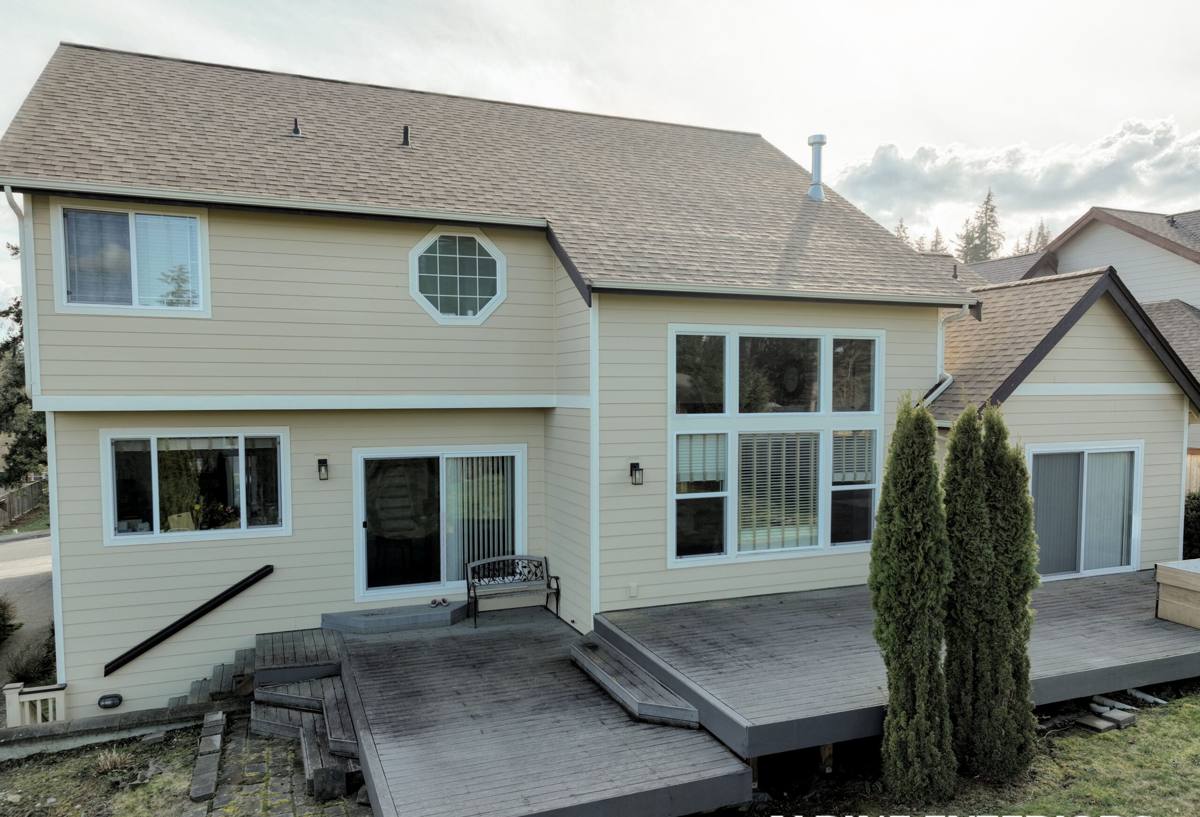
Signs a Fremont Deck Needs Replacement, Not Just Repair
A lot of homeowners call us wanting a repair quote and end up learning the deck has moved past that point. Here's how to tell the difference before we even show up:
- Soft or spongy spots when you walk the deck, especially near the house or at board edges — usually rot underneath, not just a surface issue
- Persistent green or black staining that comes back within weeks of cleaning — a sign moisture is trapped, not just sitting on the surface
- Fasteners that are rusted, backing out, or leaving dark streaks down the wood — indicates the wrong hardware was used for a wet climate
- Gaps opening up between the ledger board and the house, or visible daylight where the deck meets the siding
- Railing posts that wobble or flex — often means the post base has rotted below the surface
- A deck more than 20-25 years old built with older lumber and fastening standards that predate current code
If one or two boards are soft but the framing underneath is sound, repair can make sense. If the ledger connection, joists, or posts are compromised, replacement is the honest recommendation — patching over structural rot just delays the real cost and adds risk.
Why Rot Spreads Fast Here
In a drier region, a small rot pocket might stay contained for years. In Seattle's rain pattern, wood rarely gets a long enough dry stretch to slow fungal growth. Once decay starts in a joist or ledger, it tends to spread through the wet season faster than homeowners expect, which is why what looks like a minor soft spot in spring can become a structural problem by fall.
What a Correct Deck Replacement Actually Involves
A deck replacement is more than swapping old boards for new ones. Done right, it touches every layer of the structure:
Ledger and Structural Connection
The ledger board — where the deck attaches to the house — is the single most important connection on the entire structure, and it's also the piece most exposed to water runoff off the siding. We flash it properly with a code-compliant water diversion system so runoff sheds away from the house rather than pooling behind the ledger, which is one of the most common failure points we find on older Seattle-area decks.
Footings and Posts
Footings need to sit below frost depth and bear on undisturbed or properly compacted soil. In this climate, we also pay close attention to drainage around the footing itself, since standing water at the base of a post accelerates decay in wood posts and can undermine even concrete footings over time.
Joists, Framing, and Ventilation
Joist spacing and sizing follow current code span tables for the decking material chosen. Just as important in a wet climate is airflow underneath the deck — framing that's too close to grade or too enclosed traps humidity and slows drying between rain events, which shortens the life of everything above it.
Fasteners and Hardware
Every screw, joist hanger, and structural connector is rated for exterior and, where called for, coastal-grade exposure. This isn't optional in a neighborhood with marine air influence — standard interior-grade hardware corrodes and stains the wood, and a rusted-out connector is a hidden structural liability, not just a cosmetic one.
Decking Surface and Railings
The visible surface and railing system go on last, but they're only as good as everything underneath. We also grade the surface and space boards correctly so water sheds off rather than sitting between planks.
Choosing a Decking Material for Seattle's Climate
There's no single "right" material for every homeowner — it depends on budget, maintenance appetite, and how the deck will be used. Here's how the common options actually perform under Fremont's rain-and-moss conditions:
| Material | Moss/Moisture Behavior | Maintenance | Typical Lifespan Here |
|---|---|---|---|
| Pressure-treated lumber | Resists rot chemically but surface still grows moss/algae without cleaning | Annual cleaning and periodic re-sealing | 15-20 years with upkeep |
| Cedar | Naturally rot-resistant, still needs sealing to control moss and graying | Sealing every 1-2 years, regular cleaning | 15-25 years with upkeep |
| Composite decking | Won't rot; capped composites resist moss staining much better than wood | Occasional washing, no sealing/staining | 25-30+ years, manufacturer warranty-backed |
| PVC decking | Fully moisture-resistant, low organic staining | Low — periodic washing | 25-30+ years |
We install pressure-treated and cedar framing as standard because it's the proven structural choice, and we'll install whichever surface material fits your budget and maintenance preference. For homeowners who are tired of the annual moss battle, composite or PVC surfaces genuinely reduce that workload — but we're honest that they cost more up front, and we won't oversell a premium material if a well-built wood deck is the better fit for your situation.
Our Deck Replacement Process
- On-site assessment — we inspect the existing deck's framing, ledger, footings, and posts to confirm what's driving the replacement decision, not just what's visible on the surface
- Design and material selection — we walk through decking material, railing style, and layout options based on your budget and how you use the space
- Permitting — we handle the permit application and inspection scheduling required for the project
- Demolition — the old deck is removed, and we check the ledger area and any framing that will be reused or exposed for hidden damage
- Structural rebuild — footings, posts, ledger flashing, and joists go in to current code, sized for the chosen decking material
- Decking, railing, and stairs installed — with attention to board spacing, fastening pattern, and drainage grade
- Final inspection and walkthrough — we confirm the work passes required inspections and walk the finished deck with you
Permits and Local Code Considerations
Most deck replacements in Seattle require a permit, particularly when the structure is being rebuilt rather than just re-surfaced, and permitting requirements can vary depending on deck height, size, and proximity to property lines. King County and City of Seattle jurisdictions each have their own review processes, and Fremont properties — many on older, narrower lots — sometimes carry setback or lot-coverage considerations worth checking early rather than after materials are ordered. We handle this process as part of the job so you're not tracking down inspection scheduling on your own.
What Affects the Cost of a Deck Replacement
| Factor | Why It Matters |
|---|---|
| Deck size and shape | More square footage and complex shapes (angles, multiple levels) increase material and labor |
| Decking material | Composite and PVC cost more upfront than pressure-treated or cedar, but reduce long-term maintenance |
| Height above grade | Taller decks require more substantial framing, railings, and sometimes stairs |
| Site access | Tight urban lots common in Fremont can slow material staging and demolition removal |
| Structural condition found | Hidden ledger or footing damage discovered during demo can add scope |
| Railing and stair complexity | Custom railing styles or multiple stair runs add labor and material cost |
We won't quote a firm number without seeing the site, but we're upfront during the estimate about the broad range a project like yours typically falls into and what's driving it.
Caring for a New Deck in This Climate
A well-built deck still needs seasonal attention in a climate like Fremont's. This short checklist covers the basics that make the biggest difference:
- Sweep leaves and debris off the surface regularly, especially in fall — trapped organic matter is what feeds moss growth
- Rinse or gently wash the deck a few times a year to interrupt moss and algae before they establish
- Check and clear any gaps between boards that collect debris, since clogged gaps stop water from draining through
- Inspect fasteners and railing connections annually for rust or looseness
- Re-seal or re-stain wood decking on the schedule appropriate to the product — don't wait until it's visibly gray and dry
- Trim back overhanging branches where possible to reduce shade and speed drying after rain
Why a Crew That Already Works Fremont Matters
Deck building isn't the same job in every climate, and it isn't even quite the same job in every part of King County. A crew that regularly works Fremont's shaded, close-set lots and marine-influenced air already knows which fastener grade holds up, how to flash a ledger against this rain pattern, and how much ventilation a deck needs underneath to actually dry between storms. That local pattern recognition is what separates a deck that looks good for a season from one that's still solid in twenty years.
We also know the practical side of working in the neighborhood — navigating tighter lot access, coordinating with the permitting jurisdictions that cover this part of Seattle, and staging material efficiently on lots where a driveway or side yard is the only access point.
Ready for an Honest Look at Your Deck?
If your Fremont deck is showing soft spots, chronic moss, or just feels like it's on borrowed time, we're happy to come take a look and give you a straight assessment — no pressure, no upsell. Fill out the form below for a free estimate, and we'll walk you through what we find and what your real options are.