 Seattle
 Capitol Hill Decks Face a Specific Kind of Wear
Capitol Hill's mix of early-1900s Craftsman and Victorian homes, dense multi-family buildings, and smaller side-yard and rooftop-adjacent decks means a lot of wood and composite structures sit under mature tree canopy, tucked between buildings, or partially shaded most of the year. That shade is nice in August and brutal the rest of the time. In King County's climate, a deck that doesn't get much direct sun or wind rarely dries out fully between rains, and Seattle gets a lot of rain spread across many months rather than a few hard storms.
Add in the salt-tinged marine air that rolls in off the Puget Sound and Lake Union, and you get a slow, steady combination of moisture and airborne salt that accelerates corrosion on fasteners and hardware, and keeps wood fibers damp longer than they were ever designed to handle. None of this means Capitol Hill decks are doomed — it means they need repair work that actually accounts for how they fail here, not a generic patch job.
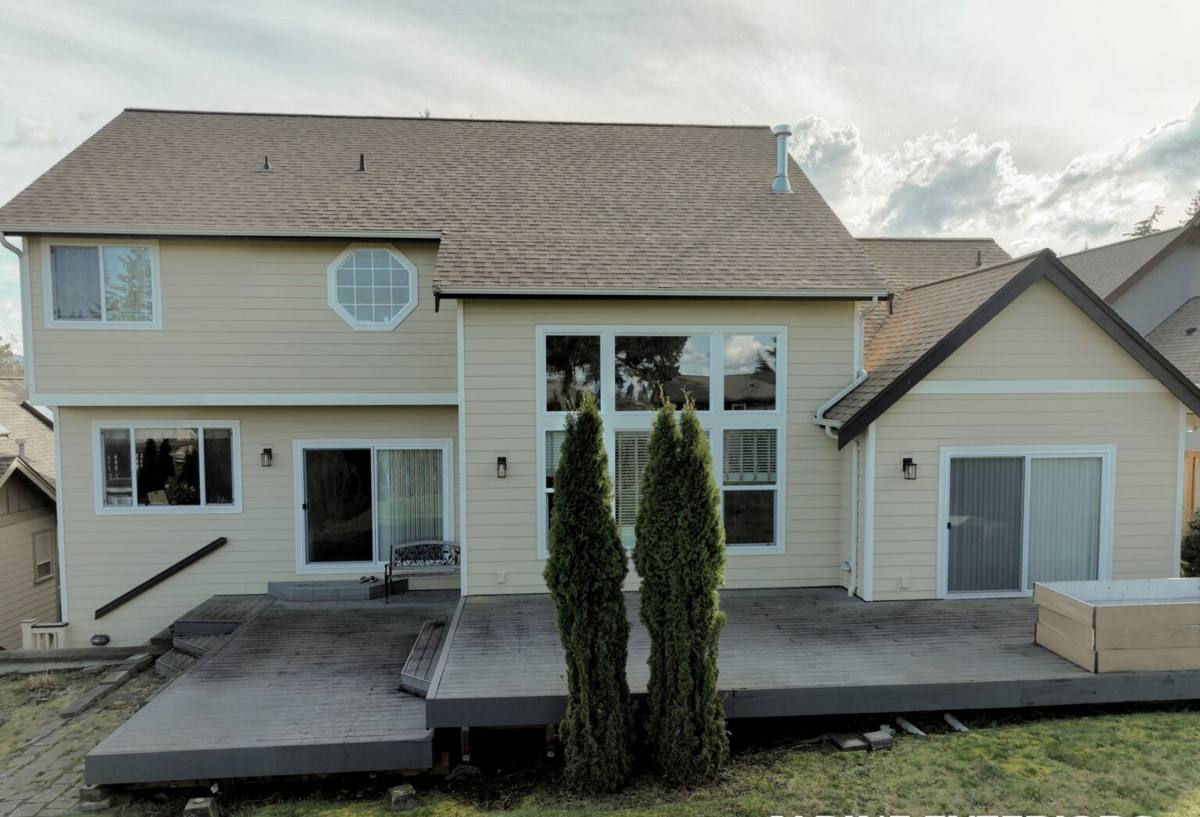
How Moss, Rain, and Salt Air Actually Damage a Deck
Moss and Organic Growth
Seattle's long moss season — realistically fall through spring, and often lingering into summer in shaded spots — isn't just cosmetic. Moss and algae hold moisture against the deck surface and between boards, which keeps wood wetter for longer stretches than open, sun-exposed decking ever experiences. Over time this softens wood fibers, promotes rot at board edges, and can clog the gaps between boards that are supposed to let water drain through.
Driving Rain and Poor Drainage
Wind-driven rain doesn't just fall straight down — it gets pushed sideways and up under railings, around post bases, and behind ledger boards where a deck attaches to the house. If flashing or ledger connections weren't detailed correctly (or have failed over time), water tracks into places it shouldn't and starts rot from the inside, which is often invisible until the damage is well advanced.
Salt Air and Metal Fasteners
Coastal and near-water exposure speeds up corrosion on nails, screws, joist hangers, and structural connectors. Corroded fasteners lose holding strength long before they look obviously rusted through, which is part of why a visual-only inspection can miss real structural weakness.
Signs a Capitol Hill Deck Needs Repair
Some problems are obvious. Others hide until someone specifically checks for them. A homeowner can usually spot the first group; the second group is why a hands-on inspection matters more than a walk-by look.
- Soft, spongy, or springy spots underfoot, especially near the house or around posts
- Boards that stay dark, slick, or mossy for weeks after rain stops
- Visible gaps opening up between decking boards or at board ends
- Rust streaks below fastener heads or around metal connectors
- Wobble in railings or stair stringers when you put weight on them
- Cracking or splitting concentrated where the deck meets the house (the ledger board)
- Standing water that takes more than a few hours to drain after a storm
- Gaps or separation where support posts meet their footings
Any one of these can be a minor fix. Several together, especially near the ledger or support posts, usually point to a structural issue worth addressing before it spreads.
What a Correct Deck Repair Actually Involves
A repair that just replaces a few visibly bad boards without checking what's underneath is a cosmetic fix, not a real one. Here's what we check and address on a properly done repair:
Structure First
The ledger board connection to the house, the beam and joist framing, post-to-footing connections, and joist hangers all get inspected before any decking goes back down. If the frame is compromised, new boards on top of it are wasted money.
Fasteners and Hardware
Given how corrosion works in this climate, we replace fasteners and connectors that show weakening rather than leaving them and hoping they hold. Matching fastener type to the decking and framing material matters — mixing incompatible metals accelerates corrosion at the connection point.
Decking Surface
Individual board replacement, re-fastening loose boards, and addressing gapping or cupping. We also look at board spacing and drainage gaps, since moss and debris buildup often traces back to gaps that were too tight to begin with or have swollen shut over time.
Railings and Stairs
Railing posts and stair stringers take a lot of lateral stress and are common failure points that get overlooked in a "just fix the boards" repair. Loose railing posts are also a safety issue, not just a maintenance one.
Flashing and Water Management
Where the deck meets the house, and around any posts or planters built into the deck, correct flashing keeps water from tracking into framing. This is the detail most likely to be missing or degraded on an older deck, and it's the one that causes the most hidden damage.
Repair or Replace: What Actually Drives the Decision
Not every deck problem calls for a full rebuild, and not every deck is worth patching indefinitely. The honest answer depends on where the damage is and how much of the structure it touches.
| Factor | Leans Toward Repair | Leans Toward Replacement |
|---|---|---|
| Damage location | Isolated boards, railings, or stairs | Ledger, main beams, or multiple posts |
| Age of structure | Under ~15 years, sound frame | Original frame decades old, prior repairs stacking up |
| Moisture pattern | Surface-level, recent | Long-term hidden rot, soft framing |
| Cost comparison | Repair cost is a fraction of rebuild | Repair cost approaches 50%+ of replacement |
| Code/permit exposure | No structural changes needed | Existing structure doesn't meet current code |
We'll always tell you plainly which side of that table your deck falls on, and why — not steer you toward the bigger job by default.
Wood vs. Composite: What We Consider When Repairing
Most Capitol Hill decks we work on are either pressure-treated wood or, on newer builds, composite decking. Each has real trade-offs when it comes to repair rather than new construction:
- Pressure-treated wood is easy to spot-repair board by board and blends reasonably well with weathered existing wood, but it needs periodic sealing to resist this region's rain and moss exposure.
- Composite decking resists moss and rot better on the surface, but exact color matches for older discontinued composite lines can be difficult, and the underlying framing still needs the same wood-frame moisture protection regardless of what's on top.
- Cedar, common on older Capitol Hill homes, has natural rot resistance but still needs its connections and ledger detailing checked — the wood species doesn't fix a bad flashing detail.
We repair to match what's already there whenever it makes sense, and we'll tell you honestly when a material transition (say, swapping a chronically rotting section to composite) is the more durable long-term call.
Our Deck Repair Process in Capitol Hill
1. On-Site Inspection
We walk the full deck, check underneath where accessible, test railings and stair connections under load, and probe suspect boards and posts rather than relying on a visual pass alone.
2. Clear Scope and Written Estimate
You get a specific list of what's failing, what we recommend fixing now versus monitoring, and a written cost range — no vague "we'll see once we open it up" without a follow-up conversation first.
3. Permits When Structural Work Is Involved
Seattle requires permits for deck work that changes the structure, footprint, or load-bearing elements. Simple board and railing repair typically doesn't trigger this, but ledger, beam, or footing work often does. We'll flag it upfront rather than let it surprise you later.
4. The Repair Itself
Structural issues get addressed before cosmetic ones, fasteners and hardware are upgraded where corrosion is a factor, and drainage and flashing details get corrected as part of the work — not treated as optional add-ons.
5. Site Access on Tight Capitol Hill Lots
Narrow side yards, shared property lines, and street parking limits are just part of working in this neighborhood. We plan material staging and access around that reality instead of treating it as a surprise mid-job.
Keeping a Repaired Deck From Needing the Same Fix Again
A repair that ignores maintenance is a temporary fix. A few habits make a real difference in this climate:
- Sweep leaves and debris off the deck surface regularly through fall, when they trap moisture against boards
- Treat visible moss early with an appropriate cleaner rather than letting it establish and spread
- Keep gutters and downspouts near the deck clear so runoff isn't dumping directly onto it
- Re-seal or re-stain wood decking on the manufacturer's recommended schedule, not just when it looks faded
- Check railing posts and stair connections once a year for looseness before it becomes a safety issue
Why Local Experience on Capitol Hill Matters
A crew that regularly works in this neighborhood already knows the common construction patterns on Capitol Hill's older homes, the tight-lot access challenges, and how shade and drainage patterns on a given block tend to behave. That's not a substitute for a careful inspection of your specific deck, but it does mean fewer surprises and a more accurate first estimate. It also means we're not guessing at how King County's rain patterns and this area's moss season will affect the repair we just finished — we're accounting for it from the start.
If your deck has soft spots, moss that won't quit, or railings that don't feel as solid as they used to, we're happy to take a look and give you a straight answer on what it needs. Request a free, no-pressure estimate using the form below, and we'll walk you through exactly what we find.