 Seattle
 Composite Decking in Wallingford: Built for Seattle's Wet Half of the Year
Wallingford's mix of older bungalows, Craftsman homes, and newer infill construction means a lot of decks here were either built decades ago with materials that have long since given up, or added more recently without much thought for how Seattle's climate actually treats an outdoor structure. Composite decking has become the go-to replacement for a good reason: it doesn't rot, it doesn't need annual staining, and it handles King County's long wet season far better than untreated or lightly sealed wood. But composite decking is only as good as the installation underneath it. A correctly built composite deck in Wallingford looks the same as a poorly built one on day one — the difference shows up two or three winters later.
We install composite decking throughout Seattle, and Wallingford's terrain and housing stock bring a few specific considerations: sloped lots common in the neighborhood, mature tree canopy that shades boards and slows drying, and homes close enough together that airflow under a deck can be limited. None of that rules out composite decking — it just means the substructure, drainage, and ventilation details matter more than the decking material itself.
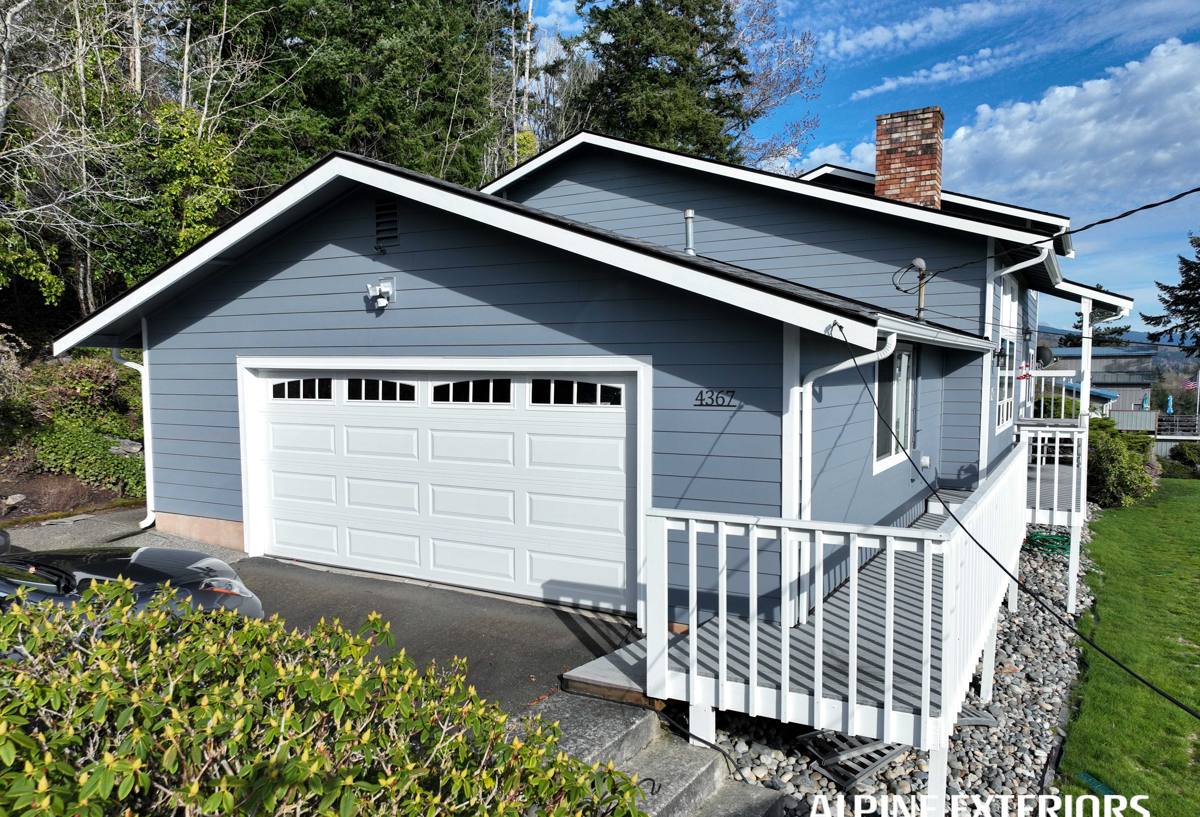
Why Composite Makes Sense for This Climate
Seattle and King County see driving rain for a good chunk of the year, followed by a long stretch of damp, low-light conditions that keep surfaces wet longer than a sunnier climate would. Add salt-tinged marine air moving in off Puget Sound and you get a combination that's tough on any exterior material, but especially tough on wood decking that isn't maintained on a strict schedule.
- Moisture resistance: Quality composite boards don't absorb water the way wood does, which matters when a deck can stay damp for days at a stretch during our fall and winter rains.
- No annual sealing: Wood decks in this climate need re-staining or sealing on a regular cycle or they start checking, cupping, and graying. Composite skips that maintenance burden entirely.
- Moss and algae resistance: Shaded, damp decks in tree-heavy neighborhoods like Wallingford are prone to moss and surface mildew. Composite doesn't feed organic growth the way bare or weathered wood does, though it still needs to be kept clean — more on that below.
- Dimensional stability: Composite boards handle our wet-to-dry swings without the warping and splitting that shows up in lower-grade lumber over time.
What "Correct" Actually Means Underneath the Boards
The composite decking itself gets most of the attention, but the parts you don't see are what determine whether the deck lasts. This is where a lot of decks — composite or wood — fail early in a climate like ours.
Ledger Board Flashing
Where the deck attaches to the house is the single most common failure point on any deck in the Pacific Northwest. Water that gets behind an improperly flashed ledger board doesn't just damage the deck — it can work its way into the wall assembly and cause rot inside the structure. We flash ledger connections properly and use appropriate barrier tape and fasteners so that connection stays sealed against driving rain.
Joist Protection
Composite decking is engineered to resist moisture, but the framing underneath is typically still wood. Wrapping joists and beams with a protective tape barrier keeps water from sitting on top of the framing where fasteners penetrate — a detail that's easy to skip and expensive to fix later.
Drainage and Slope
Boards need a slight slope away from the house and enough gap between boards for water to actually drain rather than pool. On shaded lots, standing water is what feeds moss and slime growth on the deck surface.
Ventilation Underneath
Low-to-ground decks or decks enclosed by skirting need airflow underneath to let the substructure dry out between rain events. Wallingford's tighter lot spacing and sloped yards sometimes push decks lower than ideal — when that's the case, we adjust the substructure design (vents, gaps, or a raised approach) so damp air isn't trapped underneath year-round.
Fastening System
Hidden fastener systems keep the deck surface clean and reduce the number of exposed penetration points where water could otherwise find a way in, and they let boards expand and contract with temperature and moisture changes without splitting.
Composite Decking Options: What the Trade-Offs Actually Are
"Composite" covers a range of products, and the right choice depends on budget, sun exposure, and how much upkeep you're willing to do. We'll walk through actual product lines and pricing during an estimate, but here's the general landscape:
| Type | What It's Good For | Trade-Offs |
|---|---|---|
| Capped composite (full wrap) | Highest moisture and stain resistance, best long-term performance in our climate | Higher upfront cost |
| Capped composite (partial wrap) | Good moisture resistance at a lower price point | Uncapped face is more exposed to weathering over time |
| Uncapped composite | Lowest cost composite option | More prone to moisture absorption and staining; not what we typically recommend for Seattle's wet season |
| PVC decking | Fully synthetic, no wood content, strong moisture performance | Different look and feel than wood-composite blends; higher cost |
We don't install every product on the market. Our standard is straightforward: if a board's warranty structure or moisture behavior isn't something we're comfortable standing behind in a climate this wet, we don't put it on a Wallingford deck.
Maintenance: What Actually Changes With Composite
Composite decking is genuinely lower maintenance than wood, but "low maintenance" isn't "no maintenance," especially with the moss and organic buildup common in shaded Seattle neighborhoods.
- Rinse or sweep debris (leaves, needles, seed pods) off the deck regularly — trapped organic matter holds moisture and feeds moss growth.
- Wash the surface a couple of times a year with a deck-safe cleaner to remove pollen film, algae, and grime buildup.
- Keep gaps between boards clear of debris so water keeps draining as designed.
- Check railings, stairs, and any structural hardware annually for looseness — this is true of any deck material.
- Avoid pressure washing at high pressure directly on the board surface, which can damage the cap layer on some products.
Our Installation Process
- On-site assessment: We look at your existing deck or build site, note slope, shading, tree cover, and how the deck ties into the house.
- Design and product selection: We walk through composite options, board direction, railing style, and layout based on your home and budget.
- Permitting: Deck projects in Seattle and King County often require permits depending on size and height — we handle that process as part of the job.
- Substructure build or repair: Framing, ledger flashing, joist protection, and drainage details get built or corrected before a single composite board goes down.
- Decking installation: Boards, fastening system, stairs, and railings installed to spec.
- Final walkthrough: We go over maintenance basics specific to the product installed and answer questions before we consider the job done.
Why a Crew That Works Wallingford Matters
Wallingford's building stock spans decades, and a lot of homes here have additions, sloped backyards, or older framing that a generic crew unfamiliar with Seattle's housing patterns might not account for. A contractor who works this neighborhood regularly knows what King County permitting typically expects, understands how tree cover and lot orientation affect drying time and moss buildup, and has already worked through the ledger and drainage details that matter most in a climate defined by driving rain and a long damp season. That local familiarity shows up in fewer surprises during the build and a deck that's actually set up to handle the weather it's going to see every year.
Signs Your Current Deck Needs Attention
If you're deciding between repairing an existing wood deck or replacing it with composite, a few warning signs make the decision easier:
- Soft or spongy spots in the decking or framing when you walk on them
- Persistent moss or dark staining that comes back shortly after cleaning
- Visible gaps, cracking, or splintering in the boards
- Rust streaks or loose fasteners at board connections
- Any staining or soft wood at the point where the deck meets the house
That last one — the ledger connection — is worth taking seriously. It's the spot most likely to cause damage beyond the deck itself if water has been getting behind it.
If you're weighing composite decking for a Wallingford property, we're happy to take a look and give you a straightforward assessment — no pressure, no upsell. Fill out the form below for a free estimate.