 Seattle
 Roof Repair Built for Capitol Hill's Housing Stock and Seattle's Weather
Capitol Hill is one of Seattle's older, denser neighborhoods, with a mix of early-1900s single-family homes, converted multiplexes, and townhomes packed onto tight lots. That age and density matter when it comes to roofing. Older roof decks, layered re-roofs, tricky valleys where additions were bolted onto original structures, and steep pitches on Craftsman and Tudor-style homes all show up more often here than on newer suburban builds. A repair crew that understands what's actually under the surface on a Capitol Hill roof — not just what a generic Seattle roof looks like — gets the diagnosis right the first time.
Seattle's climate doesn't do a roof any favors. Salt-tinged air drifting in off Puget Sound, long stretches of driving rain, and a moss season that can run from fall through spring all wear on roofing materials faster than drier inland climates. King County's building stock has to hold up to sustained moisture exposure, not just the occasional storm, and that changes what "correct" repair work actually looks like.
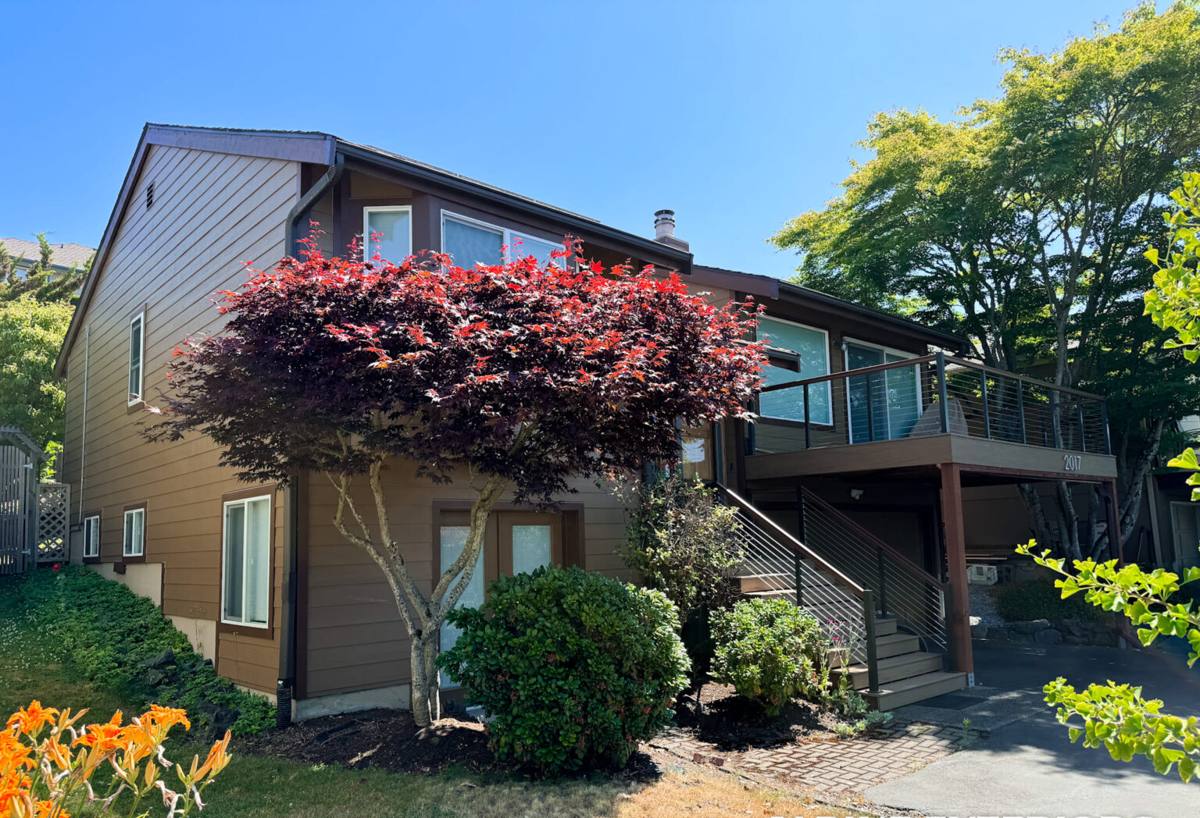
What Seattle and King County Weather Does to a Capitol Hill Roof
Roof damage around here is rarely one dramatic event. It's usually the slow accumulation of moisture doing its work over months and years.
Moss and Organic Growth
Shaded, north-facing slopes and roofs under mature trees hold moisture longer, which is exactly what moss needs to take hold. Once moss establishes itself, it lifts shingle edges, traps water against the roof deck, and accelerates granule loss on composition shingles. Left unchecked long enough, moss growth turns a simple maintenance issue into a repair issue.
Driving Rain and Wind-Driven Moisture
Seattle's rain doesn't just fall straight down — wind off the Sound pushes it sideways into flashing, vents, and any gap in the roofing system. That's why so many "mystery leaks" trace back to flashing around chimneys, skylights, and roof-wall intersections rather than the field of the roof itself.
Freeze-Thaw and Temperature Swings
King County doesn't see deep freezes often, but the occasional cold snap after a soaked roof can still cause expansion and contraction that stresses aging shingles, sealant, and flashing joints. Combined with year-round moisture exposure, this shortens the useful life of materials that would last longer in a drier climate.
Common Roof Repair Issues We See on Capitol Hill Homes
- Cracked or lifted flashing around chimneys, skylights, and dormers on older homes
- Moss-damaged shingles on shaded north- and east-facing slopes
- Clogged or undersized gutters backing water up under the roof edge
- Deteriorated pipe boots and vent seals letting water into the attic
- Soft or delaminated roof decking discovered under damaged shingles
- Ice-dam-style backups during rare cold snaps when heat loss meets a poorly ventilated attic
- Patchwork from prior repairs that weren't tied properly into the existing roofing system
On multiplex and older single-family properties especially, we often find a roof that's been patched more than once by different crews over the years. Those patches sometimes solved the immediate leak but left the surrounding material vulnerable, which is why a proper repair starts with understanding the roof's full history, not just the spot that's currently leaking.
What a Correct Roof Repair Actually Involves
A repair that holds up through another Seattle winter is more than swapping a few shingles. It requires understanding why the damage happened in the first place, or the same failure comes back in a year or two.
Diagnosis Before Anything Else
We start by tracing water back to its actual entry point, which is often several feet away from where the stain or leak shows up inside. Water travels along the underlayment and roof deck before it finds a way in, so an accurate diagnosis means checking flashing, vents, valleys, and the roof deck itself, not just the visible surface damage.
Matching Materials Correctly
Shingle color, profile, and even granule composition change over the years, so an exact match isn't always possible on an older roof. Our standard is to match as closely as the market allows and place patch material where it blends reasonably rather than standing out on a highly visible slope.
Flashing and Underlayment, Not Just Shingles
Most repair failures we're called back to fix (from other crews' work) trace to flashing or underlayment that was reused instead of replaced, or sealant used as a substitute for proper flashing. We replace flashing and underlayment in the repair area rather than caulking over old material, because sealant is a short-term fix, not a repair.
Checking the Roof Deck
If water has been getting in for a while, the plywood or board sheathing underneath may be soft or delaminated. Shingling over damaged decking looks fine for a season but fails again quickly. Any soft decking we find gets cut out and replaced before new material goes down.
How Our Repair Process Works
- Inspection. We get on the roof (weather permitting) and inspect the damage area, the roof deck, flashing, ventilation, and any related trouble spots like gutters or valleys.
- Written scope and estimate. You get a clear explanation of what's actually wrong, what we recommend, and a written price before any work starts — no surprise add-ons once we're up there.
- Repair work. We remove damaged material back to solid, dry substrate, replace decking if needed, install new underlayment and flashing, and match shingles or roofing material as closely as available.
- Cleanup and walk-through. Job site debris and old material are cleared, and we walk you through what was done and what to watch for going forward.
We're straightforward about what a repair can and can't fix. If a roof has enough age or damage that repair would just be a short-term patch on a system nearing the end of its service life, we'll tell you that plainly instead of billing for repairs that won't hold.
Repair or Replace: How We Help You Decide
Not every roof problem calls for the same solution. Age, extent of damage, and how many prior repairs are already on the roof all factor into an honest recommendation.
| Situation | Repair Usually Makes Sense | Replacement Worth Discussing |
|---|---|---|
| Roof age | Roughly under 15-20 years, depending on material | Near or past typical material lifespan |
| Damage extent | Localized — one slope, one flashing point, one leak source | Multiple slopes affected or widespread granule loss |
| Roof deck condition | Solid, dry sheathing under the damaged area | Soft or delaminated decking in multiple areas |
| Repair history | First or second repair on that section | Roof has been patched repeatedly over the years |
| Underlying materials | Underlayment and flashing still in reasonable shape elsewhere | Underlayment brittle or failing across the roof |
We'll never push a full replacement when a repair is the honest answer, and we won't recommend a repair that's just going to fail again in a year. The goal is telling you what the roof actually needs.
Moss, Debris, and Maintenance Between Repairs
A lot of repeat repair calls in this climate come down to maintenance gaps rather than material failure. Keeping ahead of moss and debris buys real years of life out of a Capitol Hill roof.
- Clear gutters and downspouts at least twice a year — more often under overhanging trees
- Have moss physically removed rather than just treated, since dead moss still traps moisture
- Check and clear valleys where two roof slopes meet — debris collects there fastest
- Look at flashing around chimneys and skylights annually for lifted edges or cracked sealant
- Trim back branches that keep a section of roof shaded and damp longer than the rest
- Address small leaks promptly — a small flashing fix now is cheaper than deck repair later
None of this replaces a professional inspection, but staying on top of it reduces how often you need one.
Materials and Methods We Use
For repair work, we match to what's already on the roof where a reasonable match exists — composition shingle, cedar shake, or other common Seattle-area roofing materials. Where we deviate from a homeowner's original material choice on a section being replaced, it's because of how that material performs under sustained King County moisture, not personal preference. Materials that shed water quickly, resist moss colonization, and hold up to repeated wetting and drying cycles simply require less maintenance and fewer emergency repairs over time in this climate. We'll walk through the trade-offs — appearance, maintenance burden, and cost — honestly rather than just installing what's cheapest or what we happen to have on the truck.
Cost Factors for Capitol Hill Roof Repairs
Repair costs vary a lot based on what's actually wrong, so we avoid quoting numbers before an inspection. In general, the factors below move the price up or down.
| Factor | Effect on Cost |
|---|---|
| Roof pitch and accessibility | Steep or hard-to-access roofs (common on Capitol Hill's older homes) take longer and cost more |
| Extent of decking damage | Deck replacement adds material and labor beyond a surface patch |
| Material match availability | Discontinued or unusual shingle profiles can add cost or require a larger patch area |
| Flashing complexity | Chimneys, skylights, and multiple roof-wall intersections add labor time |
| Number of repair areas | Bundling multiple small repairs in one visit is more efficient than separate trips |
We give a written, itemized estimate before starting so you know what you're paying for and why — not a vague lump sum.
Why a Crew That Already Works Capitol Hill Matters
Roofing on a dense, older neighborhood like Capitol Hill comes with practical realities that don't show up on a suburban job: tight lot lines and setbacks, shared walls or close-set neighboring structures, street parking limitations for equipment, and older homes where the roof, siding, and gutters were all installed and modified together over decades. A crew that regularly works this part of Seattle knows to check for those interactions instead of treating the roof as an isolated system. That local familiarity, combined with straightforward communication about what a roof actually needs, is what separates a repair that lasts from one that's back on our schedule next season.
If you've got a leak, missing shingles, or a roof that's just due for a look after another wet King County winter, we're happy to come take a look. Use the form below to request a free, no-pressure estimate — we'll give you a straight answer about what your roof needs and what it'll take to fix it right.