 Seattle
 Ballard's Siding Problem Isn't Like the Rest of Seattle
Ballard sits close to Salmon Bay and the Puget Sound shipping lanes, and that proximity to saltwater changes what siding has to deal with compared to a house a few miles inland. Salt-laden air accelerates corrosion on fasteners and trim metal, and it degrades cheap paint finishes faster than plain rain does. Add King County's long, wet winters and the shade cover from mature trees on many Ballard lots, and you get a near-constant low-grade moisture load on the north and west sides of a house for months at a time. That combination — salt air, driving rain off the water, and a moss season that can run from October into April — is exactly the kind of environment that separates siding that holds up for decades from siding that starts failing in five or ten years.
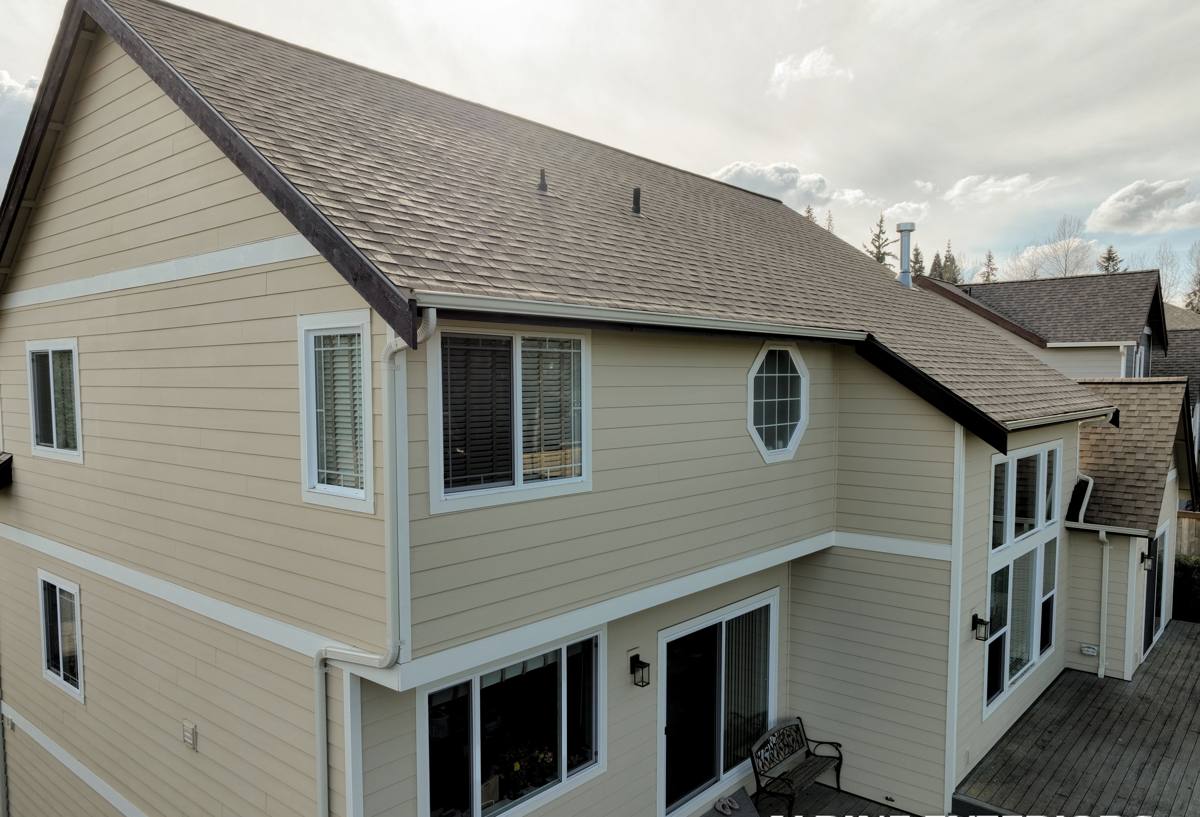
We install exclusively James Hardie fiber cement siding, and Ballard is one of the neighborhoods where that decision matters most. This page covers what Ballard homes specifically need from a siding installation, what a correct job actually involves, and why the climate here punishes shortcuts.
What Ballard's Climate Actually Does to Siding
Salt Air and Corrosion
Homes within a mile or two of Salmon Bay and the Ballard Locks get airborne salt exposure that inland Seattle neighborhoods don't. Salt accelerates the breakdown of exposed fasteners, uncoated flashing, and lower-grade trim. It also works into hairline cracks in paint film and speeds up peeling and chalking. Siding materials and finishes that aren't engineered for coastal exposure tend to show their age faster here.
Driving Rain Off the Water
Wind off the water pushes rain sideways into west- and northwest-facing walls, which is a big part of Ballard's exposure profile. That means water isn't just falling on the siding — it's being driven into every lap, seam, and penetration. A siding system with sloppy overlaps, under-sized laps, or poorly sealed penetrations around windows and vents will take on moisture in these conditions even if the material itself is sound.
Moss, Shade, and Standing Moisture
Ballard's mix of mature street trees and close-set lots means a lot of homes have siding that stays shaded and damp for long stretches of the wet season. Moss and algae don't just look bad — they hold moisture against the siding surface, which is hard on any substrate that isn't dimensionally stable and rot-resistant. Wood-based and wood-adjacent siding products are the most vulnerable here; fiber cement isn't a food source for moss and doesn't swell or rot from sustained dampness the way engineered wood products can.
Why We Only Install James Hardie in This Neighborhood
James Hardie fiber cement is a blend of cement, sand, and cellulose fiber, factory-cured into boards that are non-combustible, dimensionally stable, and engineered specifically for regional moisture exposure through Hardie's HZ5 product line, which is built for the Pacific Northwest's wet, marine-influenced climate. The factory-applied ColorPlus finish is baked on and warranted separately from the substrate, which matters in an environment where UV and salt air both work against paint.
We don't install vinyl, LP SmartSide, Cemplank, Allura, primed spruce, or cedar. Each of those has legitimate uses in the right climate and price point, but none of them is what we'd choose to put on a Ballard home ourselves, for reasons specific to this environment:
- Vinyl expands and contracts significantly with temperature swings and can warp or crack from wind-driven impact; its seams and J-channels are also a common water-entry point in driving-rain conditions.
- LP SmartSide and other engineered wood products use wood strand substrates that are more vulnerable to sustained moisture exposure than cement-based siding, which is a real liability in a shaded, moss-prone environment where the siding doesn't dry out quickly.
- Primed spruce and cedar require ongoing maintenance — recoating, caulking, moss treatment — to keep water out, and in a climate this wet, the maintenance interval tends to slip before the siding is due for it.
Hardie's fiber cement composition and factory finish are built to hold up with far less of that maintenance burden, and the company backs it with a strong transferable limited warranty when installed to spec — which is the other half of the equation, because even the best siding fails early if it's installed wrong.
What a Correct Installation Involves
The siding board itself is only part of the system. In a high-moisture, salt-exposed neighborhood like Ballard, the details around the board are what determine whether the wall assembly stays dry for the next 30-plus years.
Weather-Resistive Barrier and Drainage Plane
Every installation starts with a continuous weather-resistive barrier behind the siding, with a drainage gap that lets any moisture that gets past the cladding drain and evaporate instead of sitting against the sheathing. This is standard practice for any correctly installed siding, but it's non-negotiable in a climate where wind-driven rain is a regular occurrence.
Flashing at Every Penetration
Windows, doors, hose bibs, vents, and any other wall penetration need proper flashing integrated with the weather barrier — not just caulk. Caulk is a maintenance item that fails over time; flashing is a permanent detail. Given how much wind-driven rain Ballard's west-facing walls take, flashing quality is one of the biggest determinants of whether a wall stays dry.
Fastener Selection and Placement
In salt-air exposure, fastener corrosion resistance matters more than it does inland. We use fasteners rated for the exposure and follow Hardie's fastening specifications for lap siding and panel products — correct spacing, correct embedment, correct type for the substrate. Under-driven or over-driven nails, or the wrong fastener type, are a common cause of premature siding failure regardless of the material.
Proper Clearances and Laps
Hardie specifies minimum clearances from grade, roof lines, decks, and other transitions, along with minimum lap dimensions between courses. These aren't arbitrary — they're what keeps water from wicking up into the bottom edge of the siding or pooling where two surfaces meet. Skipping them is one of the most common ways installers void the manufacturer warranty without the homeowner ever knowing.
Caulking and Joint Treatment
Every seam, corner, and trim joint gets treated according to Hardie's specifications, using sealants compatible with the ColorPlus finish. In a marine-influenced climate, joint failure is one of the first places water intrusion shows up, so this step gets the same attention as the field installation.
Our Process for a Ballard Siding Installation
| Stage | What Happens |
|---|---|
| Assessment | On-site inspection of existing siding, sheathing condition, moisture damage, and exposure factors specific to the home's orientation and lot (shade, wind exposure, proximity to water) |
| Tear-off and sheathing check | Removal of existing siding, inspection of sheathing for rot or water damage before anything new goes up, and repair of any compromised sheathing |
| Weather barrier and drainage plane | Continuous house wrap or equivalent barrier installed with a drainage gap behind the cladding |
| Flashing and penetration detailing | Windows, doors, and penetrations flashed and integrated with the weather barrier before siding installation begins |
| Hardie installation | Boards installed to manufacturer spec — fastening, laps, clearances, and joint treatment per Hardie's published installation guidelines |
| Trim, caulking, and finish detail | Corner boards, trim, and joint sealing completed with compatible materials |
| Final walkthrough | Walk the job with the homeowner, review the work, and go over warranty registration |
What to Ask Any Contractor Before They Touch Your Siding
Ballard has enough moisture and salt exposure that a poor installation shows its problems faster than it would in a drier inland neighborhood — which is actually useful, because it means it's worth being deliberate about who does the work. A few questions worth asking before hiring anyone for a siding job in this area:
- Are you a certified installer for the product you're proposing, and can you show manufacturer certification?
- What weather-resistive barrier and drainage plane will you use behind the siding?
- How will you flash windows, doors, and other penetrations — and is that detailed in the estimate, or just implied?
- What fastener type and spacing will you use, and is it appropriate for salt-air exposure?
- Does the installation meet the manufacturer's specifications closely enough to keep the warranty valid?
- Have you worked in this specific part of Seattle before, and do you understand the wind and moisture exposure on this lot?
A crew that already works Ballard regularly has seen how the local exposure plays out on real houses — which walls take the worst of the driving rain, which lots hold moss the longest, where salt corrosion shows up first. That local pattern recognition is hard to substitute for, and it shows up in the small decisions made on the job, not just the big ones.
Maintenance Expectations After Installation
One of the practical advantages of James Hardie fiber cement in a climate like this is how little ongoing maintenance it needs compared to wood-based alternatives. It doesn't need periodic repainting on the same schedule as primed wood, it isn't a food source for moss the way cedar can be, and it won't swell or delaminate from sustained damp exposure. That said, no siding is maintenance-free:
- Rinse off accumulated grime, pollen, and light moss growth once or twice a year, especially on shaded north- and west-facing walls.
- Keep gutters clear and functioning so water isn't overflowing onto the siding below.
- Trim back vegetation that's holding moisture against the wall or blocking airflow and sun exposure.
- Inspect caulking at trim joints and penetrations periodically, since sealant is the one component that does eventually need occasional attention.
- Address any impact damage or gaps promptly rather than letting water find its way behind the cladding.
None of this is heavy upkeep — it's the kind of light seasonal attention that keeps a well-installed system performing the way it's designed to for decades.
Cost Factors Specific to a Ballard Job
Every home and lot is different, so we don't quote broad prices without seeing the job, but a few factors tend to move the estimate on Ballard homes specifically:
| Factor | Why It Matters Here |
|---|---|
| Existing sheathing condition | Homes with a history of moisture intrusion, common in older Ballard housing stock, sometimes need sheathing repair before new siding goes on |
| Wall exposure and access | Close lot setbacks and mature landscaping common in Ballard can affect scaffolding, staging, and access, which affects labor time |
| Trim and architectural detail | Older Ballard homes often have more trim and detail work than newer construction, which adds labor for corners, casing, and joint treatment |
| Extent of tear-off | Full removal of old siding versus a smaller repair or partial-wall project changes scope significantly |
| Flashing and penetration count | More windows, vents, and penetrations mean more flashing detail work, which is time well spent given the driving-rain exposure |
Get a Straight Answer for Your Home
If your Ballard home's siding is showing moss buildup, peeling paint, soft spots, or it's simply reaching the age where wood-based siding starts needing real attention, we're happy to take a look and give you an honest read on where things stand. We'll walk the exterior, point out what we see, and explain what a correct James Hardie installation would involve for your specific home and exposure — no pressure, no upsell. Request a free estimate using the form below and we'll set up a time to come take a look.