 Seattle
 Asphalt Shingle Roofing Built for Ballard's Weather, Not a Generic Climate
Ballard sits close enough to the water that homes here deal with a slightly different mix of punishment than roofs a few miles inland. You've got salt-laden air coming off Puget Sound, wind-driven rain that doesn't just fall straight down but gets pushed sideways into eaves and vents, and a wet season that runs long enough for moss and moisture to sit on a roof deck for months at a stretch. Asphalt shingle roofing is still the right call for most Ballard homes — it's durable, cost-effective, and easy to repair — but only when it's installed with this specific climate in mind. A shingle roof detailed for a dry inland suburb and one detailed for a house three blocks from the Ballard Locks are not the same job, even if the shingles themselves look identical off the shelf.
This page covers what a correctly installed or repaired asphalt shingle roof actually involves in Ballard, what tends to go wrong when it isn't done right, and how we approach the work as a crew that's out in Seattle neighborhoods like this one on a regular basis.
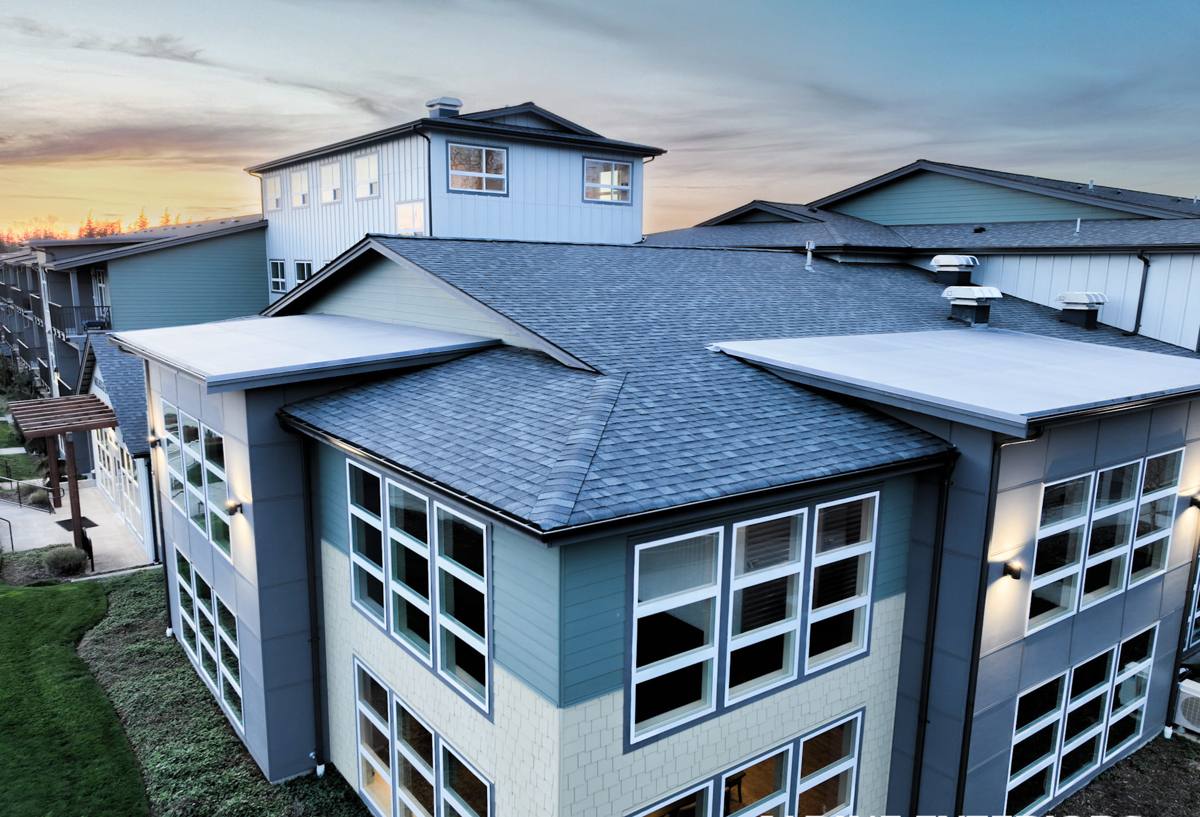
What Ballard's Climate Actually Does to a Shingle Roof
Every roofing material has a failure pattern tied to its environment. In Ballard, three factors matter more than most homeowners realize until they're dealing with a leak or a premature re-roof.
Salt Air and Metal Fasteners
Proximity to Puget Sound means airborne salt reaches roofs and accelerates corrosion on exposed metal — flashing, fasteners, vent caps, and gutter hardware. Standard electro-galvanized nails and lower-grade flashing can start showing rust streaks and pinholing years before they would inland. This is a material-selection issue as much as an installation issue: the fasteners and flashing metal need to be rated for coastal exposure, not just "what's on the shelf."
Wind-Driven Rain
Seattle rain in general is more about duration than intensity, but King County storms coming off the Sound frequently push rain sideways instead of straight down. That matters at every penetration point on a roof — vent stacks, chimneys, skylights, and the transitions where a roof meets a wall. A shingle roof that would stay dry under vertical rain can still take on water at these points if the underlayment, step flashing, and sealant details weren't built for wind-driven moisture specifically.
Moss and Extended Wet Season
Ballard's roofs, like most in this part of King County, spend a long stretch of the year damp, shaded in places by mature trees, and rarely fully dry. That's an ideal environment for moss and algae to establish on the north-facing and shaded slopes of a roof. Moss isn't just cosmetic — it holds moisture directly against the shingle surface, lifts shingle edges as it grows, and can work granules loose over time, shortening the roof's effective lifespan if left unmanaged.
What a Correct Ballard Asphalt Shingle Job Involves
A shingle roof is a system, not a single product. The shingle itself gets the attention, but the layers underneath and the details around penetrations are what actually determine whether the roof performs in this climate.
- Deck inspection and repair: Any soft, delaminated, or water-stained decking gets replaced before new roofing goes down — covering a compromised deck just hides the problem.
- Ice-and-water shield at vulnerable zones: Even though Ballard doesn't see heavy ice damming like colder climates, self-adhering waterproof membrane at eaves, valleys, and penetrations gives real backup protection against wind-driven rain.
- Synthetic underlayment across the full deck: A quality synthetic underlayment sheds water more reliably than older felt products and holds up better through a long, wet install season.
- Corrosion-resistant flashing and fasteners: Given the salt air exposure, we treat coastal-rated metal as the standard here, not an upgrade.
- Proper step and counter-flashing at walls and chimneys: These are the most common leak points on any shingle roof, and doubly so where wind pushes rain sideways into them.
- Balanced attic ventilation: Intake and exhaust venting sized correctly keeps moisture from condensing under the deck, which matters in a climate where the air itself is often near saturation.
- Manufacturer-spec nailing pattern: Under-nailing or over-driving fasteners is a common cause of wind-related shingle loss — it's a five-minute detail that determines whether shingles survive a real storm.
Choosing a Shingle Product for This Climate
Not every asphalt shingle line is built the same way, and in a climate with Ballard's moisture and moss pressure, a few product characteristics matter more than they would elsewhere.
| Factor | Why It Matters Here |
|---|---|
| Algae-resistant granules (copper or ceramic-coated) | Directly slows moss and algae growth on shaded, north-facing slopes common in Ballard's tree-lined lots |
| Wind rating | Storms off the Sound can produce sustained gusts; a higher wind-rated shingle with correct nailing holds up better over time |
| Laminate (architectural) vs. 3-tab construction | Laminate shingles are heavier and generally shed wind-driven rain and resist uplift better than older 3-tab profiles |
| Warranty structure | Algae-resistance and wind-resistance warranties are often separate from the base material warranty — worth reading closely, not just the headline years |
We don't push one brand as universally "the best" — the right shingle depends on the home's exposure, roof pitch, and budget. What we do insist on is matching the product's rated strengths to what this specific climate demands, rather than defaulting to whatever is cheapest per square.
Our Process, Start to Finish
1. On-Site Inspection
We walk the roof (or use a drone where pitch or access makes that safer) and check the deck, flashing, ventilation, and any problem areas from inside the attic if accessible. We also look specifically for moss buildup patterns, which tell us a lot about where moisture is sitting longest.
2. Written Scope and Straight Numbers
You get a clear written scope — what's being replaced, what materials are specified, and why. No vague line items. If a repair is a genuine option instead of a full replacement, we'll say so.
3. Protecting the Property
Landscaping, gutters, and siding get covered or protected before tear-off starts. Ballard's mature trees and tighter lots mean debris control matters more than on a wide-open new build.
4. Tear-Off and Deck Assessment
Old roofing comes off down to the deck, which gets inspected in daylight before anything new goes down. This is the point where hidden moisture damage — often from years of unmanaged moss or a failed flashing detail — actually gets found and fixed.
5. Installation to Manufacturer Spec
Underlayment, ice-and-water shield, flashing, and shingles go down in that order, following manufacturer installation requirements exactly — this is what keeps the product warranty valid and what actually determines wind and water performance.
6. Final Walkthrough
We walk the finished roof and the property with you, cover care and moss-prevention basics, and answer questions before we consider the job done.
Repair, Recover, or Full Replacement?
Not every roof problem in Ballard needs a full tear-off. The right call depends on the roof's age, the extent of the damage, and what's happening under the surface.
| Situation | Likely Approach |
|---|---|
| Isolated leak, roof under 10-15 years old, deck sound | Targeted repair — flashing, localized shingles, or sealant work |
| Heavy moss coverage, granule loss, shingles still adhered | Moss treatment and cleaning, possibly with spot repairs |
| Widespread granule loss, curling, or age past 20-25 years | Full replacement — patching an aging roof rarely pencils out long term |
| Deck rot found during inspection | Full replacement, since decking repair requires removing the roofing anyway |
We'll always tell you honestly which category your roof falls into rather than defaulting to the most expensive option.
Moss Prevention and Ongoing Care
Because Ballard's wet season is long, moss control is an ongoing maintenance item, not a one-time fix. A few habits make a real difference in roof lifespan:
- Keep overhanging branches trimmed back to reduce shade and debris on the roof surface
- Clear gutters and valleys of leaves and needles at least once before winter and once after
- Have visible moss removed gently (not power-washed, which can strip granules) as soon as it appears
- Consider zinc or copper strips near the ridge on shaded slopes, which help suppress regrowth over time
- Schedule a roof check every few years even with no visible problems — small flashing or sealant issues are far cheaper to fix early
Why a Crew That Already Works Ballard Matters
Roofing crews that mainly work drier, inland climates don't always default to coastal-rated flashing or think about wind-driven rain at wall transitions, because it's simply not the daily reality where they usually work. A crew that regularly works Seattle neighborhoods like Ballard treats salt air exposure, sideways rain, and moss pressure as standard planning inputs, not exceptions. That shows up in material choices, in flashing details, and in how the roof is expected to perform five and ten years out — not just on install day.
Local familiarity also means faster response if something does come up after the job — for a storm-related issue, a follow-up question, or routine maintenance guidance, you're dealing with a crew that already knows the house and the neighborhood's conditions.
Questions to Ask Before Hiring for Ballard Roofing Work
- Is your crew using coastal-rated flashing and fasteners, or standard-grade material?
- What underlayment and ice-and-water shield are specified, and where will they be installed?
- How will you handle moss on shaded slopes — is that addressed in the scope or left out?
- Is the quoted price a fixed scope, or does it allow for surprises found once tear-off starts?
- What's the manufacturer's wind rating on the shingle you're proposing, and does the nailing pattern meet it?
If your Ballard home is due for a roof inspection, a repair, or a full asphalt shingle replacement, we're happy to take a look and give you a straight assessment. Request a free, no-pressure estimate using the form below, and we'll walk you through exactly what your roof needs and why.